


The deadline in an IRS audit letter matters more than the first wave of worry. The notice explains how and when to present records. For a mail audit, the Internal Revenue Service can ordinarily grant a one-time automatic 30-day extension, according to the Internal Revenue Service. A clear, timely response helps keep the review focused on the items the IRS has asked about.
It’s understandable to feel uncertain about what to send, especially when the IRS requests records about income, credits, or deductions. Your documents should support the amounts reported on your return and explain the transactions, rather than leave them unexplained. You don’t have to handle an IRS audit alone: an authorized representative can act for you in IRS matters.
This article explains how to respond to an IRS mail audit, which records may support common tax claims, and how far back the IRS generally can review a return. You’ll also learn what may happen if you disagree with proposed changes, so you can make informed decisions at each stage.
Key Takeaways
- Match records to the income, credits, or deductions under review, and include context that explains each transaction.
- Understand the usual audit lookback period and when a substantial error may lead the IRS to review additional years.
- For a mail audit, follow the notice’s instructions and submit copies of relevant records, not originals.
- Learn why audit selection and rates can vary by return details, income level, and tax year, and what those figures can tell you.
- See how professional representation can help organize a response and address proposed changes.
Documents supporting income, credits, and deductions
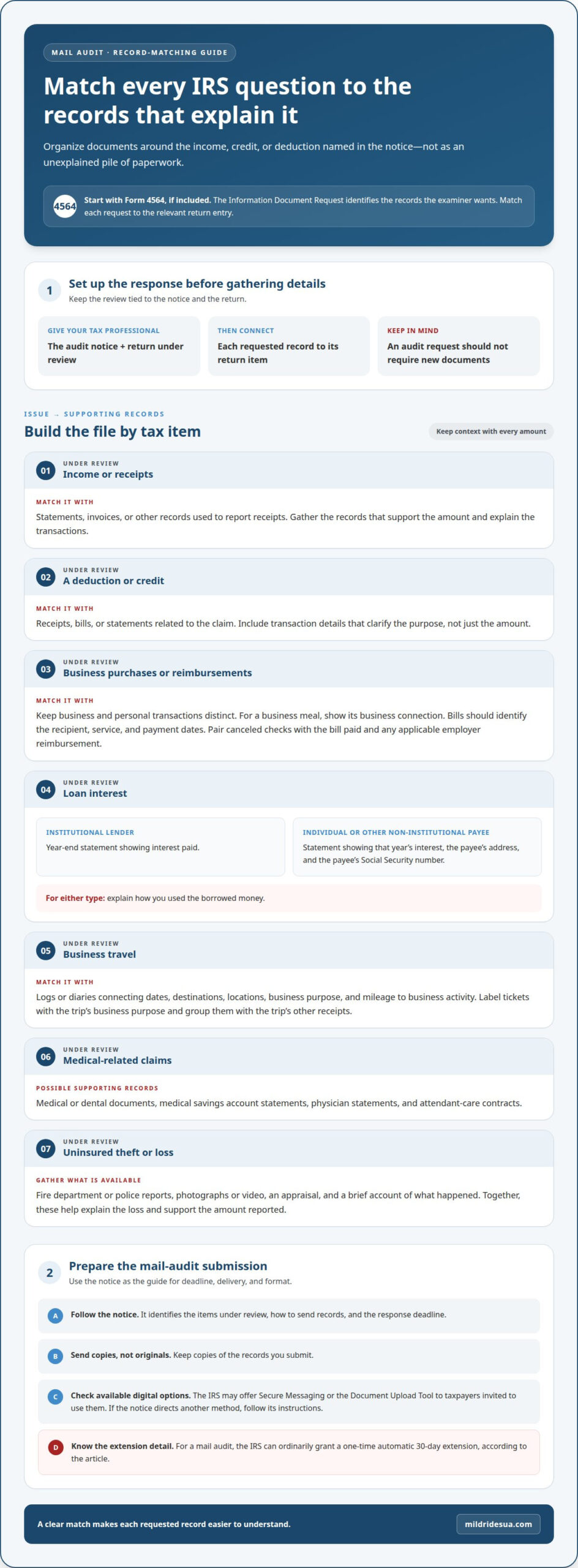
Give your tax professional the audit notice, the return under review, and records supporting the items in question. Include documents used to report income, claim credits, or calculate deductions, along with transaction details that explain their purpose.
An Information Document Request, or Form 4564, identifies records the examiner wants. Match each requested item to the relevant return entry. For income, that may mean bringing together statements, invoices, or other records used to report receipts. For a deduction or credit, provide the supporting receipts, bills, or statements that relate to the claim. An audit request should not require you to create new documents.
Keep business and personal transactions distinct. For example, records for a business meal should show its business connection, not just the purchase. Bills should identify the recipient, service, and payment dates. If you submit canceled checks, pair each check with the bill it paid and any applicable employer reimbursement.
Support loan interest claims with records suited to the lender. For an institutional loan, provide the year-end statement showing interest paid. For a loan from an individual or other non-institutional payee, provide a statement showing that year’s interest, the payee’s address, and the payee’s Social Security number. Loan records should also explain how you used the borrowed money.
Travel records should connect dates, destinations, and expenses to business activity. Logs or diaries can document locations, business purpose, and mileage. Label tickets with the trip’s business purpose and group them with other receipts from that trip. For medical-related claims, records may include medical or dental documents, medical savings account statements, physician statements, and attendant-care contracts.
For an uninsured theft or loss, gather available fire department or police reports, photographs or video, an appraisal, and a brief account of what happened. These materials help explain the loss and support the amount reported. A tax professional can organize records by issue and connect each document to the return item under review.
Digital submission depends on the options stated in your notice. The IRS may offer Secure Messaging or the Document Upload Tool to taxpayers invited to use them. A tax professional can organize the requested files for an available digital submission method and keep them tied to the specific request. If the notice directs you to use another method, follow its instructions and retain copies of the records you submit.
How far back can the IRS go to audit my return?
The usual review period reaches back three years. According to the Internal Revenue Service, the agency generally can audit U.S. tax returns filed within the last three years. The relevant dates depend on when the return was filed, so identify the tax years named in the notice before assessing its scope.
A substantial error can extend the review period. If the IRS identifies one, it may add audit years and usually does not go back more than six years, according to the Internal Revenue Service. This longer period is not the standard lookback for every return; it applies when the IRS identifies a substantial error.
Being selected for an audit doesn’t always mean the IRS knows of an error. According to the Internal Revenue Service, returns may be selected randomly, because of a related return, or because information is incomplete or inaccurate. A related return can bring connected reporting into focus. For example, figures on one return may need to align with information reported on another.
Mismatches can also draw attention to specific entries. A difference between income reported on a return and information tied to that income may prompt questions. Incomplete details about deductions or credits may also need clarification. The IRS may review the supporting records and circumstances behind the reported amount, rather than treating one unexplained difference as the whole picture.
Higher earnings alone don’t establish that a return will be selected or explain why the IRS chose it. The selection reasons described by the Internal Revenue Service include random selection, a related return, or incomplete or inaccurate information. A complex return with several income sources may need more explanation than a return with straightforward wage income, but the review still focuses on the items raised.
A CPA, enrolled agent, or tax attorney may represent you. The return’s accounting complexity and the nature of any dispute can guide your choice. Fees depend on the case; factors include the years under review, the issues involved, and the records requiring analysis.
An audit adjustment can increase the tax you owe, and penalties and interest may apply depending on the findings and applicable rules. The outcome depends on the adjustment and circumstances of the return, so review proposed changes before deciding how to respond.
For returns involving several years or disputed reporting, professional tax representation can help assess the scope and organize a response. That support is especially relevant when the IRS has raised questions about related returns or substantial errors.
Audits by mail – What to do?
A tax professional can review the notice, organize the requested records, and prepare a response for the stated deadline. The Internal Revenue Service can ordinarily grant a one-time automatic 30-day extension for a mail audit response, according to the Internal Revenue Service.
Mail and Correspondence Audits
A correspondence audit takes place through letters and requested documents, rather than an in-person interview. The notice identifies the items under review, how to send records, and the response deadline. It may also request a completed questionnaire. A tax professional can connect each document to the return item it supports, helping the IRS understand the transaction and your response.
Mail, Office, and Field Audits
The IRS may conduct an audit by mail or through an interview at an IRS office, a taxpayer’s home or business, or a representative’s office. An office audit can take a few hours; an in-person field interview can take up to a full day, depending on the return’s complexity. The format matters because it determines whether you mail or present records in person.
Submitting Records and Responding to Notices
A tax professional can review the notice, organize the relevant records, and prepare a submission using the method specified in the notice. For a mailed response, the notice provides the mailing address. For an in-person audit, bring the requested records. Representation can help keep your submission aligned with the issues and deadline identified by the IRS.
Before sending anything, your tax professional can compare the request with the relevant return entries and identify which records address each question. For example, if the notice questions a deduction, pair the supporting bills and payment records with an explanation of how they relate to it. This makes each document’s purpose clearer than sending an unexplained stack of papers.
Send copies, not original records. A professional can arrange copies by issue and explain the circumstances surrounding each document, since a receipt or statement may not speak for itself. If the notice requests a questionnaire, answer its specific questions alongside the requested records instead of substituting unrelated documents.
Deadlines require close attention. If more time is needed, the Internal Revenue Service can ordinarily grant a one-time automatic 30-day extension for a mail audit response. A professional can assess the notice and prepare the extension request when appropriate, while tracking the response date and submission method stated in the letter.
Failing to respond has consequences: the IRS may complete the audit and send a report proposing changes to your return. A timely, organized response gives the examiner the requested information to review. Keep the notice, response, and submitted records together so you and your representative can refer to the same materials if the IRS follows up.
Audit notification and preparation
The Internal Revenue Service notifies selected taxpayers of an audit by mail, not by telephone. Review a letter claiming to begin an audit carefully. The written notice identifies the tax year and items under examination, then explains how and when to present records. These details establish the audit’s scope and your response deadline.
Start by matching the notice to the correct tax return and tax year. Read each request closely, including any listed income, credit, or deduction. For example, a request about business expenses calls for records related to those expenses, not an unrelated collection of general business paperwork. Note the requested format and deadline so your response addresses the examiner’s questions.
Records used to prepare a return should be retained for at least three years from the filing date, according to the Internal Revenue Service. That period can help taxpayers locate documents for returns still within ordinary audit review. Useful files may include returns, income statements, receipts, and bookkeeping records. If a return is being examined, preserve the records and correspondence together rather than separating documents from the year they support.
Organized records make it easier to see how each figure was calculated. Sort records by tax year and type of income or expense, then prepare a transaction summary linking totals to individual entries. For example, a business expense summary can list the date, amount, purpose, and supporting record for each transaction. Identify personal and business costs so mixed-use expenses are presented with context.
Preparation also depends on the audit format. For an in-person examination, bring the records requested in the notice and group them by issue. You may represent yourself or use an authorized representative in IRS matters. A representative can review the notice, organize records, and help present the requested information. Make sure you understand which return items are under review and which documents support them.
Keep a copy of the notice and response with the supporting records. If you miss the deadline, the IRS will complete the audit and send a report proposing tax-return changes. Timely preparation is especially important when the notice identifies several issues or requests records from different parts of a return. A methodical review helps ensure your response addresses each request instead of leaving questions unanswered.
What are the IRS audit rates by income level and tax year?
An audit rate is meaningful only when it relates to a specific income group and tax year. A percentage without both details can blur differences between returns filed in different years. It also doesn’t predict whether a particular taxpayer will receive a notice. Treat a rate as a broad comparison, not a personal forecast.
To interpret an audit rate, identify the tax year being measured and the income category used. Then determine what the percentage counts: audited returns in that group compared with the group’s total returns. For example, a figure for one filing year cannot automatically describe another year. Differences in the returns included can change the comparison.
Income level is only one way to group returns. Other features may affect selection, such as a related return or incomplete or inaccurate information. These factors help explain why taxpayers with similar reported income may have different experiences. An income-band rate describes a group; it doesn’t explain why an individual return is examined.
The tax year matters, too. Audit rates can differ because the returns and examination activity being counted differ. Compare like with like: use the same income measure, tax year, and definition of an audit. Otherwise, the comparison may suggest a trend that the underlying figures don’t establish.
Reported income may not tell the full story of a return. For example, a return with business income and several deductions can raise different questions from a return reporting only wages. The IRS may also give a return another look when reported travel expenses are 20% or more above the occupational norm. That example concerns a reported item, not an audit-rate percentage.
If you receive a notice, focus on the tax year and items the IRS identifies instead of using a broad rate to estimate your risk. An examination letter concerns the return named in the notice. Your response depends on its requests, supporting records, and deadlines, not simply on your income category.
A tax professional can help interpret a notice and prepare a response based on the return’s specific issues. Discuss professional audit representation when you need support assessing the examination and organizing a clear, documented response.
Mildrid Esua, CPA, PLLC
Mildrid Esua, CPA, PLLC provides IRS representation for individuals and small businesses responding to questions about a tax return. When a notice requests records, proposes changes, or involves several tax years, professional support can help clarify the issues, organize your response, and guide decisions about next steps.
The firm also provides tax resolution and back-tax support. These services may be relevant when an examination connects to unpaid taxes or other unresolved tax matters. The right support depends on the notice, the records involved, and whether you agree with the IRS’s proposed findings.
If you have received an audit notice and want to discuss your situation, contact Mildrid Esua, CPA, PLLC.
Take the next step with clarity
An IRS audit can prompt you to reassess how your financial records support the decisions reflected on a return. Alongside responding to the current notice, a considered approach can help identify where clearer documentation or tax planning may support future filing decisions.
Before choosing a path, focus the discussion on the return under review, the questions raised, and the outcome you’re seeking. This gives a tax professional a practical starting point for understanding your circumstances and discussing next steps. You deserve advice grounded in your situation, not assumptions based only on broad audit trends.
Mildrid Esua, CPA, PLLC can discuss your concerns and help you consider a response suited to the issues involved. Discuss your tax audit situation with Mildrid Esua, CPA, PLLC, and move forward with a clearer plan.
Frequently Asked Questions
How am I notified?
The IRS sends an audit notice by mail, not by telephone. Read the letter for the tax year and return items involved, along with instructions for presenting information. For example, the notice may ask about a particular credit rather than the entire return. Keep it with related correspondence so you can identify which examination each later letter concerns.
How do I know if the IRS received my response?
Keep a complete copy of your response and a record of how and when you sent it. For mailed documents, retain any mailing receipt or tracking record. For an electronic submission, save any confirmation shown by the submission channel. If a later IRS letter refers to your documents, match its date and subject to your records before responding to another request.
How does the IRS conclude an audit?
The IRS issues examination findings for you to review. If you agree, you’re asked to sign the examination report or a similar form. If you disagree, possible routes include a conference with an IRS manager, mediation, or an appeal. A Notice of Deficiency sent by certified mail generally allows 90 days to petition the U.S. Tax Court, according to the Internal Revenue Service.
How will the IRS conduct my audit?
The IRS can examine records through correspondence or arrange an interview at an IRS office, your home or business, or a representative’s office. The notice identifies the format and matters under examination. For example, an office meeting may focus on selected entries, while a field examination can involve a more complex return. Follow the notice’s instructions for presenting information.
What are my rights?
You have the right to professional and courteous treatment from IRS employees, and to privacy and confidentiality in tax matters. You may represent yourself or use an authorized representative. You also have the right to appeal disagreements internally and before the courts. These rights matter if you believe a requested disclosure is too broad or disagree with the IRS’s interpretation of information.
What do I need to provide?
Provide records that relate to the items the examiner is reviewing, not an unrelated collection of paperwork. For an S corporation return, for example, a shareholder’s Schedule K-1 reports that shareholder’s share of income, losses, deductions, and credits. Other relevant documents depend on the issue, such as a credit or a reported income item. Include a brief explanation connecting each record to the question.
What does “audit” mean?
An IRS audit is an examination of a tax return to review reported information and supporting records. It may focus on selected entries rather than the entire return. For example, an examiner might ask for support for a deduction or compare reported figures with information from a related return. The notice identifies the subjects under review, so pay close attention to its scope.
What happens if I don’t respond by the due date?
If you miss the deadline, the IRS may complete the examination and send a report proposing changes to your return. You may then be responding to proposed findings instead of the original document request. Keep the notice’s due date visible while preparing your response. If the deadline has passed, review the latest IRS correspondence promptly to understand the decision or next step it describes.




1 Comment
Leave your reply.