

The cost to file back taxes with a CPA depends less on the number of overdue returns than on the work each return requires. Missing records, multiple income sources, business schedules, and unresolved tax issues can all add complexity, so the price for a straightforward current-year return may not reflect what catching up involves. Back taxes are more than a stack of forms: preparation and any separate resolution work affect the overall scope.
It’s reasonable to want a clear estimate before committing, especially when you’re already dealing with overdue returns. This article explains what drives CPA fees for back-tax filings, how hourly billing and flat fees may apply, and how professional preparation compares with tax software and other filing options. It also explains why filing returns and resolving an IRS balance are related but distinct parts of getting your tax situation back in order.
Key Takeaways
- Expect the workload, not simply the number of overdue years, to shape preparation fees. Income sources, business schedules, missing records, and state filings can all add complexity.
- Understand whether the CPA will bill by the hour, charge a flat fee, or use a different pricing approach, and what work that fee covers.
- Compare tax software, retail preparation, and professional help by the complexity of your returns and whether you need support beyond filing.
- Organize income records and prior tax documents before preparation begins to reduce avoidable back-and-forth and make the work more efficient.
- Separate filing overdue returns from resolving tax debt; a return can bring your filings up to date, while addressing an outstanding balance may require additional resolution work.
What Affects CPA Tax Preparation Fees?
The cost of preparing back-tax returns depends on their complexity, supporting records, and the work needed for each year. Give the CPA prior returns, W-2s and 1099s, business income and expense records, bank statements, and IRS notices for the years involved.
For a practical overview of filing overdue returns, watch this video:
Fees by Return Complexity
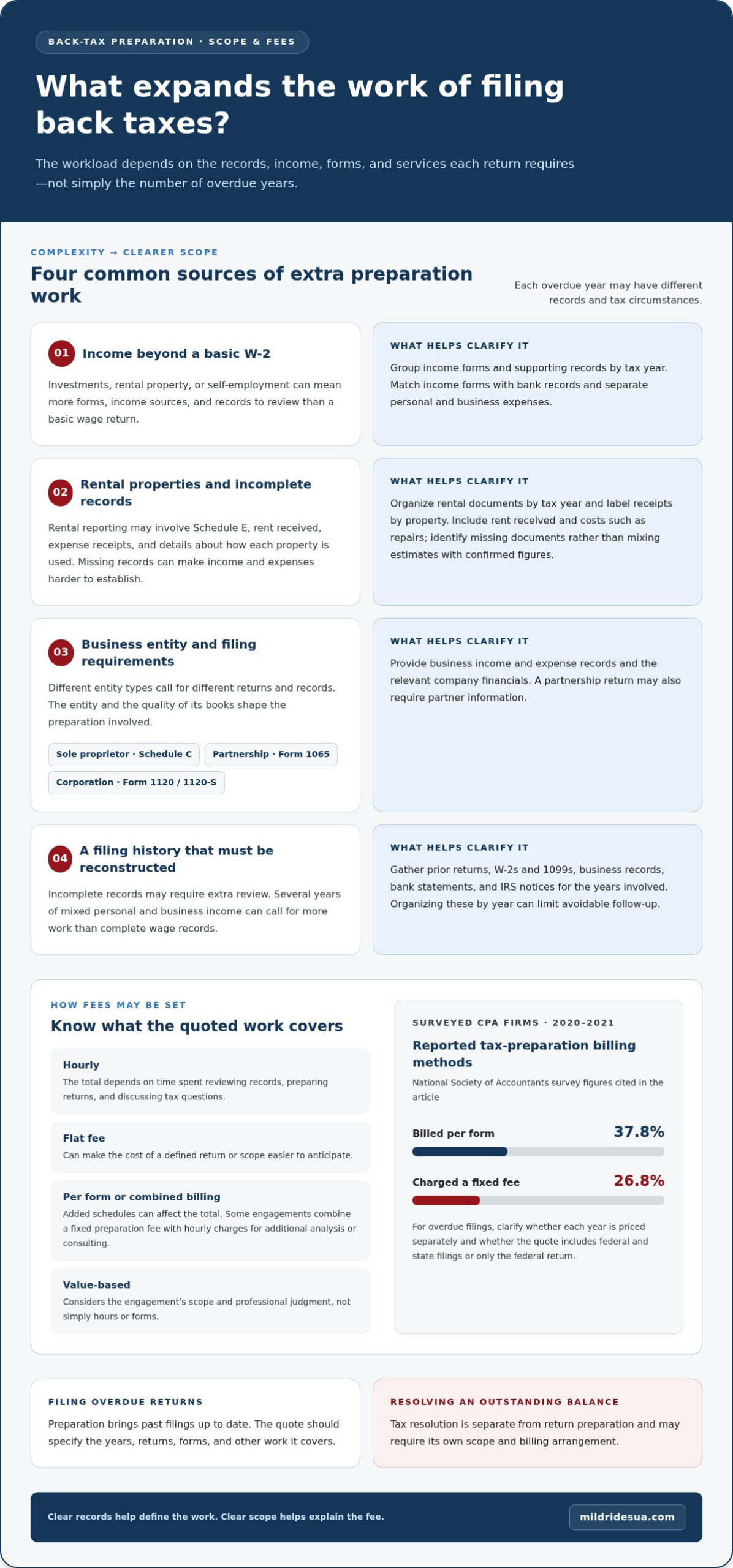
Return complexity means the forms, income sources, and records needed to prepare an accurate tax return. A basic return with W-2 income requires less analysis than one involving investments, rental property, or self-employment. For back taxes, each overdue year can bring different documents and tax circumstances. That means a simple year and a business year may require very different preparation.
Rental property owners may need Schedule E, income records, expense receipts, and details about how each property is used. Missing records can make it harder to establish rental income and expenses, while multiple properties add separate activity to review. Organize each property’s records by tax year, including rent received and costs such as repairs. This gives the CPA a clearer picture of the return’s scope.
Business entity type also changes the required preparation. A sole proprietor generally reports business activity on Schedule C, while partnerships use Form 1065 and corporations use Form 1120 or Form 1120-S. Those filings involve different records and reporting needs. For example, a partnership return may require partner information, while a corporation’s return depends on company financials. The entity and quality of its books shape the work involved.
DIY Software and Professional Preparation
DIY tax software guides you through preparing returns, while a CPA provides professional preparation and can assess records across overdue years. Software may suit a straightforward return with complete records, but returns involving Schedule C, Schedule E, or missing information need closer review. The distinction matters because filing multiple years can raise issues that software may not resolve on its own.
To reduce preparation work, sort documents by tax year before sending them. Match income forms with bank records, separate personal and business expenses, and label rental receipts by property. Include IRS notices and prior returns so the CPA doesn’t have to reconstruct your filing history. If a document is missing, identify it clearly rather than mixing estimates with confirmed figures. Organized records make the return’s scope easier to assess and limit avoidable follow-up.
Do CPAs charge by the hour or offer flat fees?
CPAs may bill by time, charge a fixed amount for defined work, or set fees according to the engagement’s scope. For overdue returns, the billing model affects how records, additional forms, and separate tax services shape preparation costs.
CPA Pricing Models
Hourly, flat-fee, and value-based pricing are different ways to set a professional fee. A flat fee can make the cost of a defined return easier to anticipate, while hourly billing ties the amount to time spent. Value-based pricing considers the engagement’s scope and professional judgment, not simply hours or forms. For business owners, understanding the model helps clarify what the tax preparation engagement covers.
Hourly Rates for Tax Services
Hourly rates cover the time a CPA spends reviewing income, records, and tax questions. The rate alone doesn’t determine the total, because the hours required matter too.
For back-tax work, time can include reviewing prior filings, organizing incomplete records, preparing returns, and discussing unresolved items. A business owner with several years of mixed personal and business income may need more review than someone with complete wage records. If the work expands beyond preparation into tax resolution, that may involve a separate scope and billing arrangement. Ask what the fee covers and how additional tasks are billed.
Hourly and Per-Form Charges
Per-form pricing sets a fee for each return form prepared, rather than charging only by the hour. The National Society of Accountants reported that 37.8% of surveyed CPA firms billed tax preparation per form in 2020-2021, while 26.8% charged a fixed fee. A return with added schedules can therefore affect the total under either structure. For overdue filings, clarify whether each tax year is priced separately.
Some engagements combine billing models: a fixed preparation fee may cover specified returns, while hourly charges apply to additional analysis or consulting. Compare the quote’s scope with your needs, including the years, returns, and forms involved. For example, confirm whether the quoted work covers federal and state filings or only the federal return. This makes estimates easier to compare on equal terms.
Before work begins, group records by year and list known forms, income sources, and unresolved tax matters. That gives the professional a clearer basis for estimating time or defining a flat-fee scope. If business records need broader organization alongside overdue filing, small-business tax preparation may be relevant to the engagement.
Comparisons with tax software, enrolled agents, and retail tax services
Filing options differ in price, personal involvement, and the range of work they can address. The right comparison depends on whether your overdue returns involve straightforward income or complex investment, business, or recordkeeping issues.
To find a reputable CPA, review their credentials and experience with back-tax filings, request a complete copy of every return, and never sign a blank return. Yes, fees can vary by location: preparation in a major U.S. city may cost 30% to 50% more than in a rural area.
Software, CPAs, and Enrolled Agents
Tax software offers a guided filing process, while a CPA or enrolled agent can provide professional preparation and discuss tax questions. For someone with simple wage income and complete records, software may be a lower-cost option. Returns involving several overdue years, investments, or incomplete records may need more analysis than software alone provides.
Compare the scope of work, not just the professional’s credentials or hourly rate. For example, ask whether the engagement covers preparation only or also includes reviewing notices and discussing next steps. Those tasks are distinct from filing a return.
A tax attorney brings a legal perspective to tax matters, while retail tax services commonly focus on preparing and filing returns. The relevant distinction is the work required. Someone with one missing wage return may need a different level of support than a business owner with several years of unfiled returns and investment income. Choose an engagement that matches the questions and records involved.
Location, Remote Service, and Planning
Geography can affect what a tax professional charges, even when the filing work is similar. Remote communication can make it practical to share records without visiting an office, but it doesn’t eliminate the work involved in reviewing multiple years or complex income. Compare proposals by the returns and services included rather than assuming remote preparation costs less.
Tax preparation reports prior-year income and expenses; tax planning focuses on decisions that may affect future filings. For example, someone with investment income may need both accurate reporting for overdue years and planning for upcoming transactions. Business owners may also need their accounting records considered alongside tax decisions. Separate the immediate filing task from ongoing planning so each engagement has a clear purpose.
Before choosing, compare the proposed scope, communication method, and whether the professional addresses your specific filing situation. A complete return copy and a defined list of included work help you understand what you’re paying for, whether you choose software, a retail preparer, an enrolled agent, a CPA, or a tax attorney.
Choosing a tax professional
For back taxes, choose a professional whose experience matches the forms and issues in your overdue returns. A W-2 Form 1040, a Schedule C for self-employment, and a corporation return require different records and preparation. Before discussing fees, describe the years involved, income sources, business activity, and any IRS notices. Specific details help define the work and make proposals easier to compare.
Credentials matter, as does relevant experience. A CPA, enrolled agent, or tax attorney may handle tax matters, but each engagement can have a different focus. For example, a sole proprietor with unfiled Schedule C returns needs someone comfortable reviewing business income and expenses. A corporation with incomplete financial records may need professional support that addresses both its entity return and underlying accounting.
Compare proposals carefully rather than choosing based on reputation or a low-sounding estimate alone. Check whether the proposed work includes each overdue year, federal and state returns, related schedules, and review of IRS correspondence. Ask how missing information is handled and what happens if the records reveal additional forms. These details clarify what the preparation cost covers.
- Match experience to the return. Ask about prior-year Form 1040 filings, Schedule C business income, rental activity, or corporation returns relevant to your case.
- Define the scope. Identify the tax years, returns, schedules, and any notice review included in the engagement.
- Clarify communication. Establish how you will share financial documents and receive questions or completed returns.
- Review the final paperwork. Obtain a complete copy of each return and never sign a blank return.
Consider how the professional will address deductions and financial records, not just enter figures on forms. For instance, a business owner’s expense records may affect Schedule C preparation, while investment documents can change an individual return’s reporting. Ask how missing records will be identified and questions explained before filing. Clear explanations are more useful than a vague promise about a typical result.
Location can influence preparation cost: tax returns may cost 30% to 50% more in a major U.S. city than in a rural area. Remote service can make document sharing practical across locations, but the return’s complexity and the work included still shape the engagement. Compare the written scope, billing approach, and experience with your specific forms, rather than assuming distance alone determines the fee.
Before authorizing work, review the engagement terms and make sure you understand who prepares the returns and answers questions. Keep your own records of submitted documents and communications. A professional who clearly explains the scope can help you make an informed choice, whether your case involves one individual return, several overdue years, or business filings for a corporation.
Tax resolution and back-tax cases
Back-tax preparation and tax resolution address related but separate parts of an overdue filing situation. Distinguishing them helps you understand what work is needed before estimating the cost to file back taxes with a CPA.
Past-Due Return Deadlines and Rules
Past-due return requirements depend on the return type and tax year, so identify each missing filing separately. Review the relevant IRS instructions and notices for the years involved, since one general deadline cannot describe every overdue return. Filing a return reports that year’s tax information, but doesn’t by itself resolve an outstanding balance. Keeping these tasks separate helps clarify what professional work your situation requires.
Entity filings can also carry specific consequences. According to the Internal Revenue Service, for 2025 partnership and S-corporation returns filed in 2026, the stated late filing penalty is $255 per partner per month, up to 12 months. The entity type and number of partners therefore matter when considering a delinquent partnership return. Preserve the IRS notices and identify which tax year and business return each one concerns.
Fees for Filing Delinquent Returns
There is no single standard charge for a CPA to file one year of back taxes. The cost to file back taxes with a CPA depends on the forms and schedules, income sources, condition of the records, and any required state filing work. A year with only wage income may require different preparation from one with business activity or investment transactions.
There is no universal average CPA fee per year for delinquent returns either. A per-year figure can obscure the difference between a complete, straightforward return and one that needs record reconstruction or additional schedules. To understand an estimate, ask which years, returns, and tasks it includes. The cost to file back taxes with a CPA also depends on whether the engagement covers preparation only or separate work addressing IRS notices or an unpaid balance.
Keep the return-filing estimate separate from resolution work. Preparing a return documents income and expenses for the year; addressing a balance or tax notice is a different task. An estimate should distinguish these scopes so you can understand what the proposed work covers and what may need separate attention.
Before discussing the work, organize income documents, prior returns, business records, and IRS correspondence by tax year. Clearly mark missing documents and separate confirmed figures from estimates. This organization helps clarify what each return needs and makes it easier to identify unresolved questions without confusing them with preparation.
If overdue filings and IRS issues are both part of your situation, discuss your back-tax situation with a tax professional who handles filing and resolution work.
Mildrid Esua, CPA, PLLC: Tax Planning & Tax Preparation,Bookkeeping IRS Representation small business accounting Tax resolution unfiled tax, tax lien , payroll servies
Mildrid Esua, CPA, PLLC helps individuals and small businesses address unfiled returns and related tax concerns through tax preparation, IRS representation, and tax resolution services. If you’re weighing CPA preparation against separate support for unresolved tax matters, the firm can help clarify your needs and plan the next steps.
For back-tax situations, preparing overdue returns and addressing tax liens or other IRS issues can involve distinct work. Tax resolution services and back taxes and IRS tax relief are relevant when filing alone doesn’t address the broader tax situation. Small-business owners can also use the firm’s bookkeeping and accounting support to organize financial records for tax preparation.
Consider reaching out when you need help with unfiled returns, IRS representation, or a tax issue that goes beyond return preparation. Contact Mildrid Esua, CPA, PLLC to discuss your situation and the support you need.
Move From Uncertainty to a Clear Tax Plan
Understanding what shapes the cost to file back taxes with a CPA gives you a stronger starting point, but the next step is deciding what you need the work to accomplish. Is your priority bringing overdue returns up to date, addressing an IRS issue, or establishing a steadier approach to future filings? Naming that priority can focus the conversation and clarify which support is relevant.
Mildrid Esua, CPA, PLLC provides tax preparation and tax resolution services, with small-business accounting support for owners whose financial records connect directly to their tax situation. The preparation fee depends on the work involved and is provided after a quote request. A conversation can help you describe your circumstances and consider a suitable path forward, while keeping filing and resolution distinct.
Contact Mildrid Esua, CPA, PLLC to discuss your tax situation and the support you’re seeking. A considered next step can bring greater clarity and help you move forward with purpose.
Frequently Asked Questions
What Drives the Cost of Tax Preparation?
Tax preparation costs depend on the return’s forms, income sources, condition of the records, and additional work requested. For example, an individual return with investment sales requires transaction details, while a business return may need reconciled income and expense records. Back-tax preparation can also involve separate files for each year. To clarify the scope, organize records by year and distinguish return preparation from help addressing IRS correspondence.
Do CPA Fees Change by Location?
Yes, location can affect CPA fees because operating costs and local demand differ. A taxpayer in Greensboro may encounter a different fee structure than someone in another market, even for similar filing work. Remote document sharing can make distance less relevant to preparation, but it doesn’t eliminate the work required. When assessing an estimate, compare the engagement scope and included filings, not location alone.
How Are These Fees Calculated?
Fees may be calculated by time spent, forms prepared, or a fixed scope of work. An invoice might separate return preparation from additional services, such as reviewing IRS correspondence or preparing an amended return. Ask what each line covers and whether additional work changes the fee. A clear breakdown helps distinguish filing costs from expenses tied to other tax matters.
How Much Do CPAs Charge for Different Types of Tax Returns?
Return type and complexity influence the preparation fee, so individual and business filings aren’t directly comparable. A Form 1040 with wage income differs from one reporting rental activity or investment transactions. Business filings also vary: Schedule C reports sole-proprietor activity, while Form 1065 and Form 1120-S serve different entity structures. The forms, supporting records, and review required determine the work involved.
How do I find an affordable CPA for taxes?
To manage preparation costs, make records easier to review before work begins. Group income statements, receipts, and prior filings by tax year, and label documents related to business or investment activity. For example, separating personal and business bank records can reduce avoidable sorting. Also compare the proposed scope, including which returns and related tasks are covered, rather than choosing solely by the lowest initial estimate.
How do I get a quote for CPA tax preparation?
A quote request should describe the tax years involved, return types, income sources, condition of the records, and any IRS notices needing attention. The price depends on the case and is provided after a quote request; relevant cost factors include forms, schedules, state filings, missing records, and whether resolution work is separate. A concise outline by year helps the preparer understand the likely scope.
What factors affect the cost of hiring a CPA for back taxes?
The cost of back-tax preparation depends on how many returns need attention and what each year contains. A year with wage statements may require different review from one involving self-employment, rental income, or investments. Missing records can also require additional analysis. Keep notices, earlier filings, and income documents together by year so the professional can distinguish return preparation from matters requiring separate IRS representation.
Do CPAs charge hourly or a flat fee for back tax returns?
CPAs may use hourly billing or a flat fee for back-tax returns, depending on the engagement’s scope. A fixed fee can cover clearly defined filing work, while hourly billing reflects time spent on review and additional questions. Some arrangements price forms individually or combine methods. Before authorizing preparation, clarify whether each overdue year is included and how newly identified work will be handled.




Leave a Reply
Your email is safe with us.