


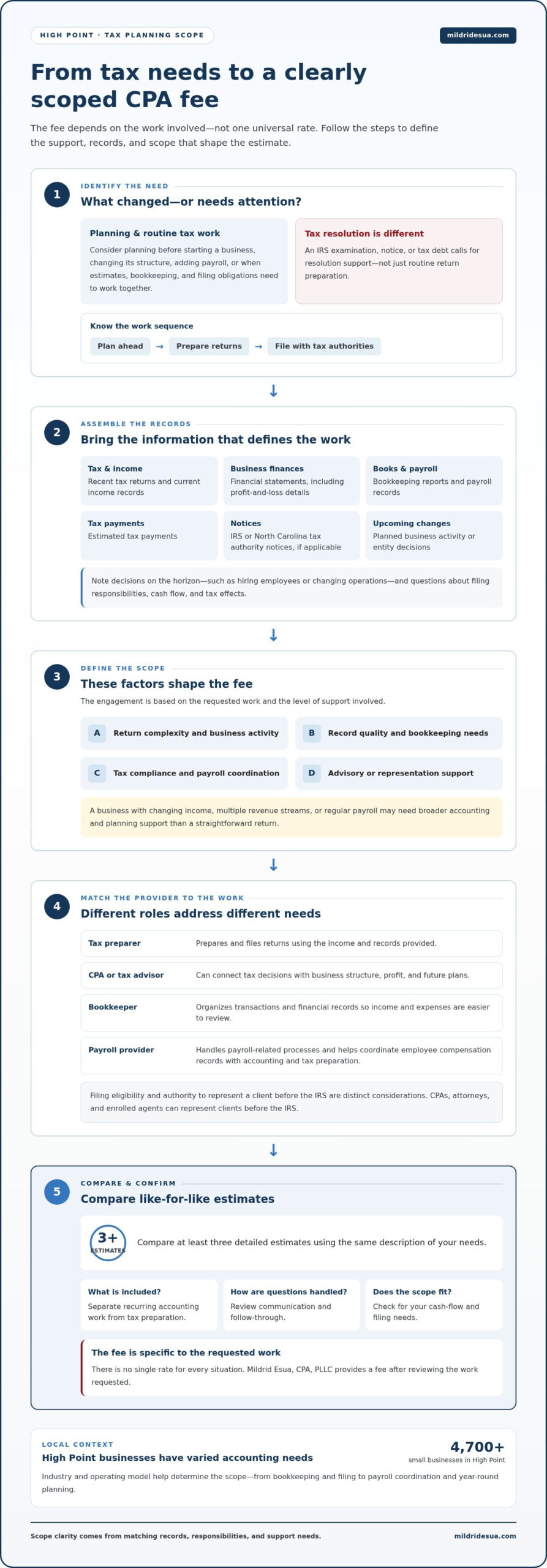
The cost of CPA tax planning services in High Point depends on the work involved, including return complexity, business activity, bookkeeping needs, and whether you also need tax compliance or resolution support. There is no single rate for every situation. Mildrid Esua, CPA, PLLC provides a fee after reviewing the requested work.
It is reasonable to want a clear picture of the work before moving forward, especially when tax planning, filing, and ongoing compliance overlap. This article explains what shapes an accountant’s fees and how planning, preparation, deductions, credits, and tax resolution differ. You will also learn which records help define the scope, so you can assess your tax needs and plan for the year ahead.
Key Takeaways
- Understand which factors shape an accountant’s fee, from return complexity to the level of planning and support involved.
- See how tax planning, preparation, filing, and audit resolution serve different needs so you can identify the right kind of help.
- Learn how organized records and timely compliance can support more informed tax decisions throughout the year.
- Explore how deductions and credits differ, and what documentation can help you assess potential eligibility.
- Compare the kinds of tax and accounting support available in High Point and identify a practical next step for your situation.
Tax planning, preparation, filing, and audit resolution
Tax planning looks ahead at income, expenses, business structure, and upcoming decisions. Tax preparation organizes those details into returns, and filing submits the returns to the relevant tax authorities.
For a North Carolina business, the entity’s tax treatment and records shape the work. North Carolina’s corporate income tax rate is 2.5% in 2026 and is scheduled to reach 0% by 2030.
To understand how to evaluate a tax professional and prepare for tax work, watch this video:
Tax Preparer Credentials and IRS Representation
According to the Internal Revenue Service, an individual with a preparer tax identification number (PTIN) is eligible to file income taxes for another person. CPAs, attorneys, and enrolled agents can represent clients before the IRS. A preparer’s filing eligibility and authority to represent you are distinct considerations.
When comparing High Point CPAs for tax planning, consider credentials, experience with returns like yours, and reviews that describe communication and follow-through. Look for relevant experience with business income, entity returns, or IRS correspondence, depending on your needs.
When to Hire a Tax Planning CPA
Consider tax planning before a major change affects your income or profit, such as starting a business, changing its structure, or adding payroll. Planning can also help when estimates, bookkeeping, and filing obligations need to work together. Tax resolution is different: it addresses an IRS examination, notice, or tax debt rather than routine return preparation.
When should you hire a CPA for tax planning in High Point? Engage one before a financial or business decision changes your tax picture, rather than waiting until filing time. Fees vary with credentials, experience, location, and return complexity. Mildrid Esua, CPA, PLLC provides a fee based on the requested work; scope, records, and the level of advisory or representation support affect the engagement.
Documents for a Tax Planning Consultation
Gather recent tax returns, current income records, and business financial statements, including profit-and-loss details. Add bookkeeping reports, payroll records, estimated tax payments, and notices from the IRS or North Carolina tax authorities, if applicable. Include documents related to planned changes, such as a new business activity or entity decision.
What documents should you prepare for a tax planning consultation? Gather those records and note upcoming decisions, such as hiring employees or changing business operations. A concise list of questions helps focus the meeting on filing responsibilities, cash flow, and the tax effects of those choices.
Accountants and tax-service providers serving High Point
High Point has more than 4,700 small businesses, so local tax needs vary by industry and operating model. A sole proprietor may need tax prep and bookkeeping, while a company with employees may also need payroll support. Start by matching the provider’s work to your actual responsibilities, not simply choosing the broadest service description.
Local business activity can shape that scope. High Point includes more than 180 showroom buildings tied to its furniture industry, and the High Point Market draws 75,000 attendees twice each year. A business with event-related sales or changing inventory may need accounting that connects income, expenses, and cash flow across the year.
When comparing CPA tax planning services in High Point, start by identifying the support your business needs. A provider focused mainly on filing may suit a straightforward return. A business with changing income, multiple revenue streams, or regular payroll may need broader accounting and planning support. For example, an owner preparing to hire employees can discuss how payroll records, projected profit, and tax decisions connect before the change takes effect.
- Tax preparer: Focuses on preparing and filing returns from the income and records you provide. This can suit a straightforward individual return or a business needing filing support.
- CPA or tax advisor: Can help connect tax decisions with business structure, profit, and future plans. This may fit an owner weighing a change in operations or tax approach.
- Bookkeeper: Organizes transactions and financial records so income and expenses are easier to review. Consistent bookkeeping also gives a preparer clearer information for tax work.
- Payroll provider: Handles payroll-related processes, which can help businesses coordinate employee compensation records with accounting and tax preparation.
Treat general market estimates as a reference, not a quote for a particular High Point engagement. The cost depends on the work’s complexity, record quality, advisory needs, and whether bookkeeping or payroll coordination is involved. Ask for a written scope that separates recurring accounting work from tax preparation.
Compare at least three detailed estimates, using the same description of your needs for each. For example, specify whether you need only an annual return or also monthly bookkeeping, payroll coordination, and planning conversations. Then compare what each estimate includes, how questions are handled, and whether the proposed work addresses your business’s cash flow and filing needs.
Before contacting a practice, list your priorities: entity type, income sources, bookkeeping status, payroll needs, and unresolved tax notices. These details clarify the work before you engage a firm and help identify the accounting support relevant to your business.
Tax compliance and management
North Carolina’s corporate income tax rate is 2.5% in 2026 and is scheduled to reach 0% by 2030. Estimated-payment due dates depend on the tax obligation, so maintain separate federal and state calendars and update them when income changes.
Compliance is a recurring process, not a task reserved for filing season. For example, an individual with wages and freelance income should track both sources, record withholding, and review estimated payments as earnings change. A business should reconcile its accounting records with filed returns, payroll reports, and payment confirmations.
Use a consistent monthly routine to surface discrepancies early:
- Match bank activity to bookkeeping records and label business transactions clearly.
- Compare year-to-date income and expenses with prior periods to identify unexpected changes.
- Review payroll records against wage and withholding reports before filing related forms.
- Record federal and North Carolina tax payments with dates, amounts, and confirmation details.
- Keep notices, filed returns, receipts, and supporting documents together by tax year.
These steps help individuals and business owners make informed decisions using current records. For example, a business whose sales rise during the year can revisit cash-flow forecasts and estimated payments before the next payment cycle. Updated bookkeeping also helps explain why reported profit differs from cash available in the bank.
Tax management connects compliance with practical planning. Separate routine obligations from decisions that may change taxable income, such as equipment purchases, hiring, or a change in business activity. Before acting, document the business purpose, expected cost, timing, and effect on cash flow. This gives a tax professional specific facts to assess rather than relying on estimates alone.
Federal and North Carolina obligations may involve different forms, reporting requirements, and payment schedules. Maintain a calendar showing each obligation, who is responsible, the records needed, and the planned review date. When income varies, update estimates using current figures instead of relying on an outdated projection.
Before submission, review every return and supporting schedule for missing income, inconsistent totals, and incorrect personal or business details. Review your paperwork before submission, and never sign a blank tax return. Keep a copy of the final filing and its supporting records so you can trace any later question to the information used.
A simple management file can bring the process together: current bookkeeping, payroll records, payment confirmations, prior returns, and correspondence. Review it whenever a major income or business change occurs. This steady process helps you track compliance obligations and connect planning decisions to reliable records.
North Carolina’s corporate income tax rate is 2.5% in 2026 and is scheduled to reach 0% by 2030. Estimated-payment due dates depend on the tax obligation, so keep separate federal and state calendars and update them as income changes.
Tax deductions and credits
A deduction and a credit affect a tax calculation in different ways. Deductions are considered when determining taxable income, while credits are applied against tax owed. For a High Point business owner, identifying the relevant records is a practical first step, not a reason to claim every expense or credit category that sounds applicable.
How can a CPA help reduce taxes for small businesses in High Point? A CPA can review income, expenses, business structure, and supporting records to identify deductions or credits that may apply. Planning also helps owners consider transaction timing and understand how choices affect profit and cash flow.
Start with an organized expense review. Group transactions by business purpose, then connect each entry to a receipt, invoice, contract, or other record. For example, note a software purchase’s business use and retain the receipt. Keep personal spending separate, and flag mixed-use expenses for review rather than assuming the full amount qualifies.
- Operating costs: Collect invoices for supplies, rent, software, and professional services, with notes explaining the business purpose.
- Vehicle or travel records: Maintain dated logs, receipts, and trip details so the advisor can assess the activity and documentation.
- Payroll and contractor records: Match payment records with agreements, invoices, and bookkeeping entries before preparing a return.
- Potential credits: Gather project descriptions, hiring records, and expense details for any credit category under consideration.
Assess deductions and credits separately. An expense may affect taxable income, while a credit may reduce tax owed. The required records can differ, so a ledger alone may not explain a transaction’s purpose or support a credit review. Add context as the year progresses rather than reconstructing it during tax preparation.
A tax advisor can review your records alongside business activity and identify items that need closer attention. For example, if a company buys equipment, document the purchase date, invoice, payment, and intended business use. These details help assess how to handle the transaction and prevent tax estimates from relying on incomplete bookkeeping.
For a focused planning discussion, prepare a transaction list in advance. Mark unusual expenses, major purchases, income changes, and credits you want assessed. Then ask how each item affects taxable income, tax owed, and cash flow. This keeps the conversation centered on decisions instead of searching through uncategorized statements.
Tax planning should connect each potential deduction or credit to accurate records and the business’s actual circumstances. A personalized review can help owners identify appropriate tax opportunities while grounding filing positions in documentation. Keep supporting records with the return so each reported item can be traced to its source.
Which CPA firms offer tax planning services in High Point, NC?
High Point taxpayers can look for CPA practices and accounting firms that combine tax preparation with year-round planning. The right fit depends on whether you need individual tax guidance, business planning, or help coordinating bookkeeping and payroll. Start by defining the work you need, then assess how clearly a firm explains its approach.
A provider focused mainly on filing may suit a straightforward return. A business with changing income, multiple revenue streams, or regular payroll may need broader accounting and planning support. For example, an owner preparing to hire employees can discuss how payroll records, projected profit, and tax decisions connect before the change takes effect.
Use the same questions and business details when comparing firms. The answers can show whether a practice understands your circumstances or is describing a generic filing process.
- Scope: Ask whether the work covers planning conversations, return preparation, bookkeeping review, or only filing.
- Relevant experience: Describe your entity type and income sources, then ask how the firm handles similar tax situations.
- Communication: Find out how the firm explains recommendations and what records it needs to evaluate them.
- Representation: If you have an IRS notice, distinguish return preparation from representation before the agency.
- Engagement terms: Request a written description of deliverables, responsibilities, and how additional work is handled.
Compare detailed estimates using an identical scope. One estimate might cover an annual return, while another includes planning discussions and bookkeeping review. Those are different engagements, so compare deliverables rather than headline amounts alone. The market recommends reviewing estimates from at least three accountants to make the differences easier to assess.
Reviews can offer useful context when they describe specific experiences, such as explanations of tax documents or follow-up on questions. Consider them alongside credentials, relevant experience, and a clearly defined engagement. A detailed review of a simple individual return may reveal little about a firm’s ability to support business-level planning.
Before contacting a practice, prepare a short profile: business structure, income sources, bookkeeping status, payroll needs, and any tax notices. Include your main decision, such as planning for a new revenue stream. This makes it easier to compare responses based on the same facts and see whether each proposed engagement addresses your needs.
For a High Point business seeking advice alongside tax preparation, explore tax planning support and consider how it could fit with your bookkeeping and filing needs.
Compare firms by asking about experience with your entity type and income sources, and consider credentials alongside reviews describing specific experiences. Reviews are most useful when they reflect work similar to yours. The engagement scope and deliverables also show whether a firm provides the planning support you need.
Mildrid Esua, CPA, PLLC: Tax Planning & Tax Preparation,Bookkeeping IRS Representation small business accounting Tax resolution unfiled tax, tax lien , payroll servies
Mildrid Esua, CPA, PLLC helps individuals and small businesses coordinate tax planning, preparation, and accounting needs. For business owners, bookkeeping and payroll support connect financial records with tax decisions. When concerns involve back taxes, unfiled returns, or a tax lien, the firm provides tax resolution services and IRS representation.
Consider this support when you need more than filing alone, such as organizing business records, planning around income, or addressing an IRS matter. The appropriate next step depends on the work involved and records available. Outline your main concern and gather relevant returns, bookkeeping information, or tax notices.
For tax planning or preparation support, contact Mildrid Esua, CPA, PLLC, or visit mildridesua.com.
Make Your Next Tax Decision With Clarity
Turn tax questions into a focused planning agenda. Note upcoming decisions, the records you can provide, and where you need clarity, such as business structure, cash flow, or an unresolved tax matter. This gives the discussion a defined purpose and helps distinguish immediate filing tasks from choices that may affect future operations. Before meeting, note what has changed since your last return and which unanswered question most affects your next decision.
Choosing CPA tax planning services in High Point involves more than preparing a return. It can also establish a consistent way to assess decisions as income, operations, and priorities change. Bring your agenda and relevant records to Mildrid Esua, CPA, PLLC, and use the discussion to identify practical next steps for your circumstances.
For a conversation about your tax and accounting needs, contact Mildrid Esua, CPA, PLLC. A deliberate plan can make complex obligations easier to manage and help you move forward with greater confidence.
Frequently Asked Questions
How much do accountants charge?
Accountant fees depend on the engagement’s scope, complexity, and records involved. Preparing a return from organized wage statements differs from work involving business income, multiple entities, or IRS representation. Mildrid Esua, CPA, PLLC provides a fee for tax planning or preparation based on the requested work. Compare written scopes that specify deliverables, responsibilities, and whether follow-up questions or additional work are included.
How do I choose an accountant near me?
Choose an accountant whose services fit your tax situation and whose communication style works for you. For example, a contractor with project income needs different experience from an employee with a single wage statement. Check credentials relevant to the work, clarify who handles your account, and compare written engagement scopes. In High Point, describe your needs consistently when evaluating proposed work.
How much does a CPA cost for a small business in High Point?
The fee depends on the requested work; entity type, transaction volume, record condition, and the level of planning or representation help define the scope. Return preparation alone differs from an engagement that includes recurring bookkeeping, payroll support, or tax resolution. Describe your business structure, accounting setup, and main concern to clarify what the proposed work covers.
How much does it cost to get taxes done?
Tax preparation fees depend on the return’s complexity and the records needed to complete it. A return with wage statements differs from one involving self-employment income, rental activity, or business schedules. For tax preparation services, the fee depends on the case and is provided after a quote request. Organize income documents, prior returns, and records of relevant transactions to help define the preparation scope.
Is it worth it to pay someone to do your taxes?
Professional preparation can be useful when your return involves business income, changing financial circumstances, or records that need careful classification. For example, a self-employed person combining client payments with deductible business expenses faces different reporting considerations from someone reporting wages alone. Consider the value of accurate organization, tax guidance, and time saved in relation to the work your return requires. Review the completed return before signing.
What tax planning services do High Point CPAs provide for individuals and businesses?
Services can include tax planning, individual and business return preparation, bookkeeping, and support with tax resolution, depending on the firm. Mildrid Esua, CPA, PLLC provides tax planning and preparation, small-business accounting, bookkeeping, payroll, IRS representation, and tax resolution. Individuals dealing with back taxes or unfiled returns can consider tax resolution support; business owners can discuss how accounting records connect with planning and filing.
How much do CPA tax planning services cost in High Point, NC?
The fee depends on the requested work; scope, records, entity structure, and the level of advisory support help define it. A planning engagement focused on a specific business decision differs from ongoing accounting combined with tax preparation. Describe the decisions you need help evaluating and the records available, then review proposed deliverables and responsibilities before proceeding.
What should I ask before choosing a tax planning CPA in High Point?
Ask what the engagement covers, which professional will handle the work, and how recommendations will be documented. Clarify whether the scope includes preparation, bookkeeping review, or IRS representation, since these are distinct tasks. Share a specific situation, such as a planned business change or an IRS notice, and ask which records will support the discussion. Also ask how the firm communicates next steps and identifies work outside the agreed scope.




Leave a Reply
Your email is safe with us.