


Your ZIP code doesn’t have to determine who can represent you before the IRS. An Enrolled Agent can represent taxpayers before the IRS in all 50 states, so living outside North Carolina doesn’t automatically prevent you from arranging tax representation for an IRS matter.
It’s understandable to want clear guidance when an IRS notice, audit, or collection issue leaves you unsure what to do next. The right tax representation can help manage IRS communications, explain the issues, and guide you through possible responses.
This article explains how tax representation can help with IRS communications, audit notices, appeals, Collection Due Process hearings, and powers of attorney. It also covers business tax matters, the information a representative may need, and how to decide whether professional support fits your situation. For business owners, representation can connect an immediate IRS concern with payroll taxes, back taxes, and ongoing tax planning. You’ll get a clearer picture of the process and when to seek help, including if you’re in Greensboro or nearby North Carolina communities.
Key Takeaways
- Responding thoughtfully to IRS notices can help clarify what the agency is requesting and what options may be available.
- A representative can help assess audit issues, organize relevant records, and manage communications about possible levies.
- According to the Internal Revenue Service, a taxpayer generally has 30 days from receiving a final notice of intent to levy to request a Collection Due Process hearing using Form 12153.
- According to the Internal Revenue Service, Form 2848 authorizes a representative to act on a taxpayer’s behalf for IRS matters.
- Business owners can connect representation for tax disputes with support for payroll concerns, back taxes, and ongoing tax planning.
Handling tax-agency communications on a taxpayer’s behalf
A representative can manage IRS communications, explain the issue, and help determine an appropriate response. The scope depends on the representative’s authority and your circumstances.
Taxpayer Representation Rights
During a tax dispute, you may authorize a professional to communicate with the IRS on your behalf. That support can keep questions, documents, and responses organized around the issue under review. You remain central to decisions, including what information to provide and whether to accept a proposed outcome.
Representation can help you understand the options raised in an IRS notice and make informed choices. A dispute about a balance due, for example, differs from a disagreement about reported income. A representative can clarify which issue the IRS is addressing and help keep your response focused on the facts.
Communication needs vary. A minor question may be resolved through direct contact with the IRS, while a dispute involving several tax periods or collection actions may require sustained coordination. An authorized representative can receive and respond to IRS communications within the authority you grant, helping you track requests and deadlines.
The collection timeline can also matter. According to the Internal Revenue Service, the IRS collection statute discussed here is a 10-year period. How that period relates to a particular balance depends on the account’s circumstances, so a representative can review the relevant notices and account details before discussing possible next steps.
Choosing a Qualified Representative
For IRS matters, authorized representatives include Enrolled Agents, tax attorneys, and CPAs. Enrolled Agents can represent taxpayers before the IRS in all 50 states, with authority governed by Circular 230. A preparer with a PTIN may prepare returns, but return preparation alone doesn’t authorize representation in IRS collections or appeals.
Hiring someone without the authority needed for your matter can leave you without representation in a collection or appeal proceeding. Before engaging a professional, identify the issue and ask whether their credentials authorize them to handle that type of IRS communication. The right fit depends on the work required, not simply on who prepared your return.
Free and Low-Cost Representation
If you’re seeking free or low-cost help near Greensboro, contact a taxpayer advocate and explain the IRS issue, notices received, and any response date shown. Ask what assistance may apply to your circumstances. This can help clarify whether advocacy support fits your situation or whether you need a representative for ongoing IRS communications.
If you consider a lower-cost service, distinguish return preparation from authority to represent you before the IRS. Ask what work is covered, who will communicate with the agency, and whether the representative can address your specific dispute. These details help you compare support based on the actual task, not a general promise of tax help.
How can a tax representative help if I get an IRS audit notice?
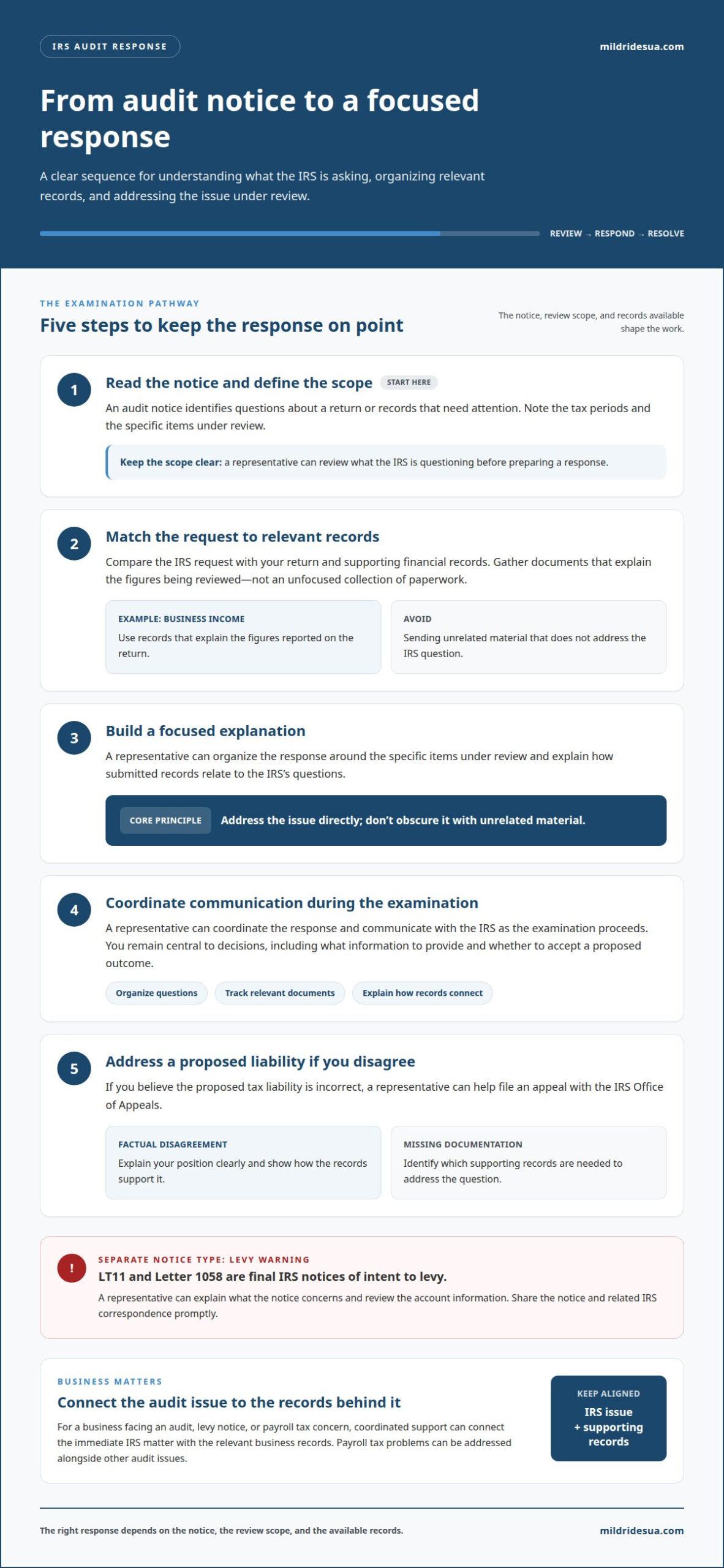
An IRS audit notice identifies questions about a return or records that need attention. A representative reviews the notice, organizes your response, and helps manage communications with the IRS.
Audit and Examination Support
An IRS audit may examine tax returns and financial records to verify their accuracy. A representative can identify the tax periods and items under review, then match the IRS request with relevant documents. For example, a question about reported business income calls for records that explain the figures on your return, not an unfocused collection of paperwork.
During an examination, a representative can coordinate your response and explain how submitted records relate to the IRS’s questions. The notice, review scope, and records available shape the work. If your business matter involves payroll, a representative can help address payroll tax problems alongside other audit issues.
Audit Defense and Dispute Resolution
Resolving an audit or tax dispute starts with reviewing the notice and identifying what the IRS is questioning. The representative then compares those items with your return and supporting financial records, prepares a focused response, and communicates with the agency as the examination proceeds. Each step should address the specific issue, not obscure it with unrelated material.
If the IRS proposes a tax liability you believe is incorrect, a representative can help file an appeal with the IRS Office of Appeals. The strength of your response depends on how clearly the records support your position. An organized explanation can distinguish a factual disagreement from missing documentation.
Help With Levies and Tax Notices
Notices require careful reading because their purpose and next steps differ. LT11 and Letter 1058 are final IRS notices of intent to levy. A representative can explain what the notice concerns, review the account information, and help determine the appropriate response. The taxpayer should promptly share the notice and related IRS correspondence with the representative. For guidance on how to stop an IRS tax levy, including the Collection Due Process hearing timeline, review the levy options available.
For a business facing an audit, levy notice, or payroll tax concern, coordinated support can connect the immediate IRS matter with the records behind it. IRS audit and tax resolution support can help bring those communications and documents into a clearer response plan.
Appeals and Collection Due Process hearings
An IRS decision can affect your balance due, payment options, or collection activity. An appeal or hearing gives you a structured way to present concerns and supporting information.
Appealing IRS Decisions
An appeal is relevant when you disagree with an IRS determination. A tax professional can review the decision, identify the disputed issue, and organize records that support your position. For example, if the IRS questions reported income, your response should connect the income figures to relevant records.
Preparation matters. A representative can clarify which facts are disputed and explain why you believe the outcome should change. A focused appeal distinguishes factual disagreements from questions about how the IRS applied information. The decision, notice, and available records shape the presentation.
Before an appeal proceeds, a representative can review the IRS correspondence alongside your account information. That review helps identify the decision being challenged and the evidence that addresses it. If you’re considering payment while disputing an amount, you can discuss how the proposed balance and available records affect your next steps.
Collection Due Process Hearings
A Collection Due Process hearing relates to a final IRS notice of intent to levy. According to the Internal Revenue Service, a taxpayer generally has 30 days from receipt of that notice to request a hearing. The request uses Form 12153.
The Internal Revenue Service names Form 12153 as the form for requesting a Collection Due Process hearing after a final notice of intent to levy. A representative can prepare the request and help present the taxpayer’s concerns clearly. The notice and the taxpayer’s circumstances guide which issues to raise.
To prepare, a tax professional can organize the final notice, account details, and records relevant to the collection issue. If your income has changed or you dispute the balance, those facts may help explain your position. The goal is to give the hearing a clear, documented account of your concern.
An appeal and a Collection Due Process hearing address different situations, so the notice matters. A representative can assess whether you’re challenging an IRS decision or responding to a levy notice. That distinction helps shape the request, supporting records, and discussion of payment options without confusing separate processes.
IRS notices about representatives and power of attorney
A representative’s authority and an IRS notice are separate parts of a tax matter. The Internal Revenue Service authorizes an IRS power of attorney for tax representation using Form 2848. The form identifies the representative and the tax matters covered, so its scope should match the issue requiring attention.
Form 2848 gives the IRS a basis to communicate with an authorized representative about the matters specified. It doesn’t mean every tax return or future issue automatically falls within that authority. For example, an individual dealing with a notice about one tax return should ensure the authorization addresses the relevant matter.
IRS correspondence can also concern the authorization itself. Letter 861C concerns an incomplete power of attorney, tax information authorization, and/or U.S. estate tax return submitted for processing. The representative can review the letter, identify what the IRS says is incomplete, and prepare a response that addresses that specific issue.
Other letters signal different representative-related actions. Letter 2673C is a representative/taxpayer response notice, while Letter 2675C concerns termination of a power of attorney. A representative can interpret the notice in context, explain what it means for communications, and organize the next response around the stated issue.
For an IRS collection notice, start by identifying the notice and the balance or action it describes. Your representative can compare that information with account records and prior correspondence. If the notice involves back taxes, the relevant tax periods and payment history can help frame the discussion.
To respond efficiently, your representative needs the complete IRS notice, related letters, and records connected to the issue. A tax return may help explain reported income, while account correspondence can show what the IRS has already requested. Keeping these materials together helps ensure your reply addresses the agency’s full concern.
Can a representative negotiate an installment agreement or Offer in Compromise? Yes. A representative can help present your circumstances to the IRS and discuss these options. Your ability to pay and financial information are relevant when evaluating a possible resolution.
For individuals and businesses, clear authorization supports focused communication instead of scattered exchanges. A representative can explain which notices require a response, prepare appropriate materials, and track how the IRS addresses them. You remain involved in decisions about the information provided and the proposed outcome.
Business tax representation
A business tax dispute can involve federal returns, payroll records, or a notice about unpaid tax. A representative helps connect the IRS’s questions with your company’s records and explain the business’s position.
Business matters often span several records, not just one personal tax return. For example, an IRS question about reported business income may require reviewing bookkeeping entries, income records, and figures reported on the return. A representative can organize relevant documents, identify gaps, and prepare a response focused on the issue named in the IRS letter.
Payroll concerns need a distinct review. A business representative can examine payroll records alongside correspondence to understand what the IRS is asking and which periods or amounts are involved. This helps you address the immediate notice while considering how payroll processes and accounting records relate to the matter.
Federal and state tax matters may involve different agencies and separate correspondence. An IRS letter is not the same as a notice from a state taxing agency, so your representative first identifies the sender, issue, and requested response. Keeping agency communications distinct helps prevent a response intended for one authority from being mistaken for a response to another.
For an audit, a representative can map each IRS request to the records that address it. If the agency asks about a business expense, for instance, the response should connect the relevant accounting entry with supporting records. If the question concerns income, the representative can trace the reported figure through your business books and tax return.
Business owners should also consider how an IRS dispute affects ongoing operations. A representative can manage agency communications while your business continues routine accounting and payroll work. Clear documentation supports both the response and future planning, especially when a notice raises questions about recordkeeping practices or previously filed returns.
Before representation begins, provide the complete IRS letter, relevant returns, accounting records, and prior correspondence. The representative can then clarify the scope of the issue, identify relevant information, and set response priorities. This organized handoff helps avoid fragmented replies and keeps the discussion anchored to the actual notice.
National operations can add complexity when a company has activities or records across locations. A tax professional can review how your business documents relate to the federal issue and distinguish that work from separate state correspondence. The right approach depends on the notice, records involved, and your business’s tax history.
For a business facing an IRS letter, get help with business tax matters and bring the correspondence and related records into a coordinated response.
Mildrid Esua, CPA, PLLC: Tax Planning & Tax Preparation,Bookkeeping IRS Representation small business accounting Tax resolution unfiled tax, tax lien , payroll servies
Mildrid Esua, CPA, PLLC helps individuals and small businesses address IRS matters through IRS representation and tax resolution services. Turn to the firm when an IRS notice, back taxes, a tax lien, or unfiled returns require professional attention.
For business owners, small business accounting, bookkeeping, and payroll services can support clearer financial records alongside tax planning and preparation. This coordinated approach can connect an immediate tax concern with the records and planning that inform ongoing business decisions.
If you need help understanding an IRS matter or organizing a response, contact Mildrid Esua, CPA, PLLC to discuss your situation.
Make Your Next Tax Decision With Clarity
An IRS matter can also prompt a broader review of how tax decisions fit your personal or business goals. Once you understand the immediate issue, consider what could make future decisions more deliberate: consistent records, clearer financial visibility, and planning that reflects your circumstances. That perspective can help turn a stressful tax question into a more informed next step.
Professional tax representation can bring structure to the process, from addressing the issue at hand to considering the broader financial picture. Mildrid Esua, CPA, PLLC provides tax resolution services and small-business tax advising, as well as tax planning and preparation. The right support depends on the issue you need to address and the records involved.
If you’re ready to discuss your situation, contact Mildrid Esua, CPA, PLLC. A clear conversation can help you identify a practical path forward with greater confidence.
Frequently Asked Questions
Can you represent me if I live in another state?
Yes, your residence outside Greensboro doesn’t by itself prevent IRS representation. An Enrolled Agent can represent taxpayers before the IRS in all 50 states. The relevant question is whether the professional is authorized for your specific matter. If your issue involves a state taxing agency rather than the IRS, clarify which agency is involved because federal and state matters are distinct.
Do I ever have to talk to the IRS myself?
Sometimes. An authorized representative can handle many IRS communications, but you may still need to provide personal or business details only you know. For example, the IRS may ask about a transaction, a change in income, or how a business record was created. Your representative can help you prepare for those discussions and explain what information the IRS is seeking.
Does representation stop IRS calls and letters?
No. Hiring a representative doesn’t automatically stop IRS calls, letters, or collection activity. With proper authorization, the representative can communicate with the IRS about the matters covered. Notices may still reach you, so keep copies and share them promptly. A new letter, for example, may request information or explain a decision that affects the representative’s next response.
How far back can a tax dispute go?
The relevant period depends on whether the issue concerns an audit or collection. The IRS generally has three years to audit a return, or six years when significant income was underreported; fraud has no audit time limit. For collection, the Internal Revenue Service identifies a 10-year collection statute. These periods address different processes, so the notice and account history matter.
What does IRS tax representation cost?
Fees depend on the case and are provided after a quote request. Cost factors include the type of IRS issue, the number of tax periods involved, the records available, and whether the matter requires audit support, collection resolution, or an appeal. A notice about one return may require different work from multiple years of unfiled returns or a business payroll tax dispute.
What is IRS Form 2848?
Form 2848 is the form used to authorize an IRS power of attorney. According to the Internal Revenue Service, this form authorizes a representative for tax matters before the agency. Its scope identifies which matters the representative can handle, so it should correspond to the issue at hand. For example, authorization for one tax matter doesn’t automatically cover every other tax issue.
What does tax representation mean in the United States?
In the United States, tax representation means an authorized tax professional acts for an individual or business in dealings with the IRS. The work may involve communicating with the agency, responding to an examination, or addressing a collection issue. The representative’s authority and your authorization define the scope. This support helps organize the matter, but you remain involved in important decisions.
Who can represent taxpayers before the IRS?
Enrolled Agents, tax attorneys, and CPAs can represent taxpayers before the IRS. A person with a PTIN may prepare tax returns, but preparation alone doesn’t authorize representation in IRS collections or appeals. When choosing a professional, consider the specific matter and whether their credentials authorize them to handle it. Preparing a return and managing an appeal, for instance, require different kinds of involvement.




1 Comment
Leave your reply.