

Could a tax return be accurate and still miss decisions that mattered during the year? A small business tax strategy NC owners can use connects business structure, current records, and North Carolina obligations before filing season arrives. When bookkeeping and tax planning happen only at year-end, it can be harder to spot issues or assess whether an entity election still fits the business.
It’s reasonable to want clarity about which federal and state requirements apply, how to organize records and tax payments, and when a business change calls for a closer review. This guide explains decisions to revisit throughout 2026, including business structure, bookkeeping, estimated payments, and North Carolina tax considerations. It also shows how timely CPA guidance can connect tax planning with day-to-day operations, helping you make informed decisions with a clearer view of your obligations.
Key Takeaways
- A small business tax strategy NC owners can use connects business structure, income, expenses, payroll, and records to decisions made before filing.
- Organized bookkeeping helps you review business activity and supporting documents throughout the year.
- Compare potential tax decisions, including deduction documentation, retirement planning, income timing, and entity elections, against your business’s circumstances.
- Use four practical checkpoints to organize records, review your position, make decisions, and prepare for filing.
- CPA guidance can bring tax planning, bookkeeping, payroll, and business structure into a more coordinated process.
What a small business tax strategy in North Carolina should accomplish
A small-business tax strategy is a coordinated set of year-round decisions that helps you understand how business structure, income, expenses, payroll, and records may affect tax obligations before filing a return. For a small business tax strategy NC owners can apply, the goal isn’t to follow a universal list of deductions. It’s to review the business’s actual activity and upcoming decisions early enough to assess them.
That review may cover whether the current entity structure still fits, how business expenses are documented, how payroll is managed, and which records support income and owner transactions. The right questions depend on the business. A sole proprietor considering a first hire, for example, has different planning needs from an established corporation reviewing compensation or a possible election.
- Entity: Business structure can affect reporting and planning considerations.
- Income and expenses: Consistent transaction records help explain business activity and support a review of potential deductions.
- Payroll and owner transactions: Clear records help distinguish business activity from payments or withdrawals involving owners.
- Timing: Planned purchases, staffing changes, or shifts in revenue can raise questions to address before year-end.
Why tax planning and tax preparation serve different purposes
Tax preparation reports past activity on the applicable returns. Tax planning looks ahead, weighing possible decisions and their tax implications before the business acts. Planning can’t guarantee a lower tax bill or a particular result. It helps owners understand relevant considerations and make informed choices. Accurate books support both tasks by giving the preparer and advisor clearer, more complete information.
For example, current records can help an owner assess whether a staffing change, a shift in expected income, or a change in business structure merits closer review. Without organized books, the discussion may rely on incomplete figures or happen at filing time, after some decisions have already been made.
Why North Carolina owners need a business-specific starting point
Federal and North Carolina tax considerations are connected, but they aren’t interchangeable. A business may need to evaluate separate state and federal requirements, depending on its entity, activities, employees, and the rules in effect for the tax year. Treating every small business alike can overlook important differences. Start by understanding how the business operates, then identify the obligations and decisions that apply.
That local context matters for owners in Greensboro, High Point, Burlington, Kernersville, Jamestown, Oak Ridge, Summerfield, and Winston-Salem. Location is only part of the picture. Structure and operations also shape a tax review. Mildrid Esua, CPA, PLLC connects tax planning with bookkeeping, preparation, and payroll, helping owners relate financial records to business decisions. The following sections offer practical ways to organize records and assess choices throughout the year.
Connect bookkeeping, tax payments, and North Carolina obligations
Reliable records do more than support a completed return. They help you understand business performance, prepare for upcoming tax payments, and identify which federal and North Carolina requirements may apply. A practical small business tax strategy NC owners can maintain links financial records to decisions: income to revenue tracking, expenses to supporting documents, payroll to wage and withholding records, and owner transactions to clear descriptions and business purposes.
Which records help an owner make better tax decisions?
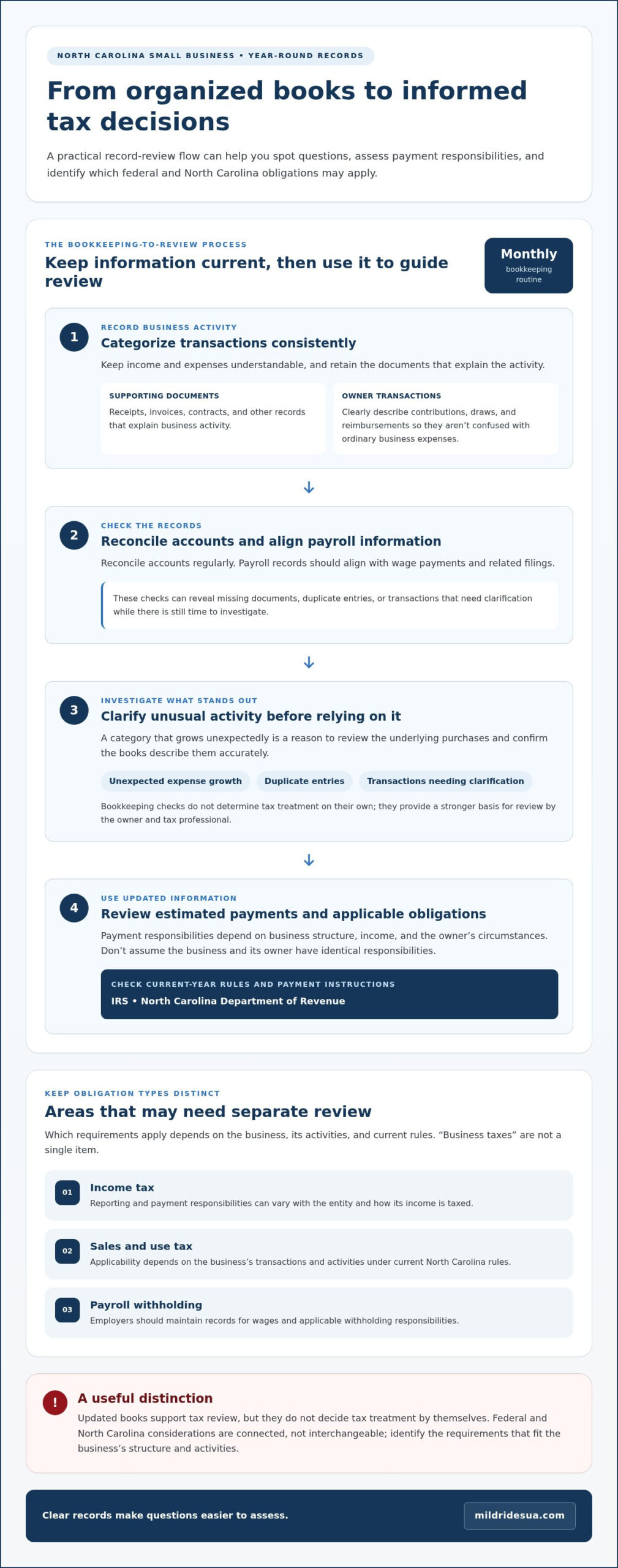
Categorize transactions consistently, reconcile accounts regularly, and retain receipts, invoices, contracts, and other documents that explain business activity. Payroll records should align with wage payments and related filings. Record owner contributions, draws, and reimbursements clearly so they aren’t confused with ordinary business expenses. A monthly routine can surface missing documents or unusual transactions while there’s still time to investigate them.
For example, an expense category that grows unexpectedly is a reason to review the underlying purchases and confirm that the books describe them accurately. Reconciliation can also reveal duplicate entries or transactions that need clarification. These checks don’t determine tax treatment on their own, but they give the owner and tax professional a stronger basis for review. A structured monthly bookkeeping process can help keep that information current.
How to think about estimated payments and state responsibilities
Estimated payment requirements depend on the business’s structure, income, and the owner’s circumstances. Don’t assume the business and its owner have identical payment responsibilities. Review current-year rules and payment instructions with the IRS and the North Carolina Department of Revenue. Use updated financial information when assessing whether payments or adjustments need attention.
Separate different obligation types instead of treating “business taxes” as a single item. Depending on the business and its activities, relevant areas may include:
- Income tax: Reporting and payment responsibilities can vary with the entity and how its income is taxed.
- Sales and use tax: Applicability depends on the business’s transactions and activities under current North Carolina rules.
- Payroll withholding: Employers should maintain records for wages and applicable withholding responsibilities.
- Other state obligations: Some entities or business activities may involve additional filing or payment requirements.
Maintain a tax calendar, but verify each deadline, form, rate, and threshold against current IRS and North Carolina Department of Revenue guidance for 2026. Rules can change, and requirements differ by tax type. Update the calendar alongside your bookkeeping so you can prepare for obligations rather than relying on memory or last year’s dates.
Mildrid Esua, CPA, PLLC connects small-business bookkeeping with tax planning and preparation. Reviewing records and tax decisions together can help turn current books into useful questions for your next planning conversation.
Compare tax strategies by business structure and circumstances
Tax decisions work best as a coordinated review, not a checklist of tactics to apply automatically. An expense deduction, retirement contribution, change in income timing, or entity election can involve different records and considerations. A useful small business tax strategy NC owners can apply starts with the business’s current structure, operating plans, cash flow, and administrative capacity. Use the comparison below to identify questions for a tailored review.
| Business context | Decision to evaluate | Records to gather | Professional review |
|---|---|---|---|
| Business purchases or operating costs | Whether expenses are documented and categorized appropriately | Receipts, invoices, payment records, and business purpose | Review documentation and applicable tax treatment |
| Owner planning for long-term savings | Whether a retirement plan aligns with goals and workforce needs | Owner goals, employee information, and cash-flow projections | Consider eligibility, plan requirements, and current limits |
| Revenue varies or a large transaction is planned | Whether income timing calls for a closer look | Contracts, invoices, expected receipts, and accounting records | Assess cash flow, accounting method, and applicable rules |
| Business structure or operations have changed | Whether to evaluate an entity or tax election | Formation documents, ownership details, financials, and payroll records | Weigh tax, legal, payroll, and administrative considerations |
Timing decisions deserve particular care. Changing when income is received or expenses are paid may affect the cash available to operate the business. Tax treatment can depend on the accounting method and applicable rules, so treat timing as a planning question, not a shortcut. A deduction also requires appropriate records and must meet applicable requirements. A general list of possible expenses can’t establish eligibility for a specific business.
When to evaluate an S corporation election
An S corporation election isn’t a default fit for every owner. Review the business’s finances and structure alongside payroll, reasonable compensation, ongoing administrative responsibilities, and applicable tax rules. These factors can affect whether the election makes sense for a specific business. Mildrid Esua, CPA, PLLC provides S corporation election guidance, and its S corporation election tax guide offers a starting point for understanding the decision.
How to assess deductions and retirement contributions
For deductions, consider whether a cost relates to business activity and whether records substantiate it. Retirement planning calls for a broader review: owner goals, employees, plan requirements, cash flow, and current eligibility rules all matter. Review 2026 limits and requirements using current authoritative guidance before acting. Neither a deduction nor a contribution strategy should be assumed to produce the same result for every owner.
The most useful comparison weighs potential tax treatment against the work and obligations a decision may create. A tailored review connects options to the business’s records, structure, and plans instead of treating one election or deduction as universally best.
Create a year-round small business tax strategy with practical checkpoints
A repeatable process makes tax planning part of business management instead of a scramble before filing. Use these four checkpoints as a working sequence. The owner leads each review, while a bookkeeper or CPA can help interpret records and identify decisions that need closer attention. Adapt the rhythm to your operations and revisit it when circumstances change.
- Organize. Gather current financial reports, receipts, invoices, payroll records, owner transactions, and documents for major purchases. Identify missing information, update and reconcile the books, and follow up on unclear entries before making decisions.
- Review. Compare current activity with prior periods and investigate meaningful changes in revenue, expenses, cash flow, or payroll. Add context, such as a new contract or staffing change, and note which tax questions need professional review.
- Decide. Assess planned actions, including hiring, an entity change, a potential election, or a major purchase. Consider business goals, cash-flow needs, and relevant tax and administrative factors. Document the decision, its timing, and any records or follow-up tasks it requires.
- Prepare for filing. Confirm that the year’s records are complete, organized, and consistent with decisions made. Gather outstanding documents, review open questions and applicable filing requirements, and track remaining responsibilities to reduce avoidable information gaps.
What to review during regular bookkeeping check-ins
At each check-in, compare financial records with earlier periods and investigate changes that appear significant for your business. Review payroll activity, owner transactions, receipts, and unresolved bookkeeping questions. A large purchase or unexpected cash-flow change, for instance, may need context before it is categorized or discussed for tax purposes. Keep a running list of questions, assign someone to resolve each one, and record the answer or next step. This makes bookkeeping a source of planning insight, not just data entry.
When a business change should prompt a tax review
A new hire, ownership change, entity election, shift in operations, major purchase, or changing cash-flow pattern can alter the questions worth asking. Raise the issue before acting when possible. Transaction timing may matter, but the right approach depends on the facts, accounting method, and applicable rules. For a broader framework, explore strategic tax planning for NC entrepreneurs.
A small business tax strategy NC owners can sustain depends on clear task ownership: know who gathers records, who evaluates decisions, and who tracks follow-up. Mildrid Esua, CPA, PLLC connects tax planning with bookkeeping, payroll, and preparation, helping business owners bring operational changes into planning conversations. Learn about small-business tax planning and how it can fit into your process.
Build a North Carolina tax strategy with Mildrid Esua, CPA, PLLC
A useful small business tax strategy NC owners can maintain connects tax decisions to the records and operations behind them. Mildrid Esua, CPA, PLLC brings tax planning and preparation together with bookkeeping and payroll, helping owners consider how financial activity and business choices relate. This coordinated approach can clarify which questions deserve attention as the business changes, rather than treating filing as a once-a-year task.
Business formation and S corporation election guidance are part of the decision-making process, not automatic recommendations. The right direction depends on the owner’s circumstances, business structure, goals, and administrative responsibilities. A new venture assessing formation choices may need a different discussion from an established business considering an election after a change in income, ownership, or operations.
The firm serves small businesses in Greensboro, High Point, Burlington, and Winston-Salem, as well as nearby North Carolina communities including Kernersville, Jamestown, Oak Ridge, and Summerfield. Local knowledge is most useful when paired with a clear understanding of how each business operates and what its records show.
What to bring to an initial small-business tax planning conversation
To make the discussion more focused, gather recent financial statements, prior tax returns, payroll records, and a short list of upcoming decisions. That list might include a planned hire, major purchase, ownership change, or question about business structure. Bring supporting documents that explain unusual transactions or recent changes, too. Complete information gives the conversation a practical starting point. If something is missing, identify it as a follow-up item.
It can also help to note what you want to understand, such as how bookkeeping and payroll connect to tax preparation or which decisions to review before they’re finalized. A concise agenda keeps the conversation grounded in your priorities and separates immediate questions from longer-term planning topics. The discussion should reflect your business’s circumstances.
How ongoing CPA support can connect decisions across the year
Bookkeeping provides a view of recorded business activity, payroll reflects employee and compensation processes, and tax planning considers how those details inform decisions. Reviewing these areas together can surface questions earlier, such as whether a change in staffing or business structure calls for closer review. Mildrid Esua, CPA, PLLC also provides IRS representation for clients facing tax matters that require support.
With relevant records and priorities in view, you can discuss your business’s current position and upcoming decisions. You don’t need to have every answer before starting. Learn about Mildrid Esua, CPA, PLLC’s tax and accounting services.
Make your next tax decision with greater clarity
A year-round plan isn’t a fixed formula. It’s a way to approach your next business decision with a clearer view of the records, obligations, and trade-offs involved. Choose a practical starting point: identify an upcoming change, gather the information it may affect, and decide when to review it. That first step can turn small business tax strategy NC from a filing-season concern into an ongoing part of how you lead your business.
As your plans evolve, tailored CPA guidance can connect tax considerations with the realities of your operations. Mildrid Esua, CPA, owns and operates the firm, which provides tax planning and preparation, bookkeeping, payroll, IRS representation, and guidance on business formation and S corporation elections. The right conversation starts with your circumstances and the decisions ahead, not a promise of a particular result.
Discuss a year-round tax strategy for your business and identify a practical next step. With a steady process and informed support, you can move forward with greater confidence.
Frequently Asked Questions
Is tax planning different from tax preparation for a small business?
Yes. Preparation determines how to report completed business activity, while planning helps you evaluate choices that are still ahead. Before signing a lease or adding a service, for example, an owner can consider how the decision may affect cash needs, records, and tax reporting. A small business tax strategy NC owners use should account for both tasks. Planning informs decisions but can’t guarantee a particular tax result.
How much should a North Carolina small business set aside for taxes?
There isn’t one percentage that fits every business. The amount depends on factors such as entity structure, income, expenses, payroll, and the owner’s broader tax circumstances. Instead of relying on a rule of thumb, use current financial results to estimate obligations and revisit the estimate when revenue or expenses change. A CPA can help assess relevant federal and North Carolina requirements. Verify current payment guidance with the IRS and North Carolina Department of Revenue.
Can I change my small business tax strategy during the year?
Yes. Revisit your strategy as the business changes. You don’t need to wait until filing season to raise a new question. A large contract, ownership change, or decision to hire may call for a fresh review. Before acting, document what changed, when it will take effect, and which records may be affected. The appropriate response depends on the circumstances and applicable rules.
Is an S corporation election always a good tax strategy for a small business?
No. An S corporation election isn’t automatically appropriate for every owner. Consider the business’s financial position, payroll needs, reasonable compensation, administrative responsibilities, and applicable rules. Weigh the ongoing work involved alongside potential tax considerations rather than focusing on one projected benefit. A CPA can review the business’s circumstances and help assess whether an election merits consideration.
What records should a small business keep for tax planning?
Keep records that explain transactions and business decisions. Useful examples include bank and credit card statements, invoices, receipts, contracts, payroll documents, loan records, and details of owner contributions or withdrawals. If you buy equipment or change how the business operates, retain documents showing what was purchased or changed and when. Organized files make it easier to answer questions, support reported figures, and identify missing information before filing.
When should a North Carolina small business talk with a CPA about taxes?
Talk with a CPA before a consequential decision, not only when a return is due. A planned hire, ownership change, new business activity, or unresolved tax notice can raise questions that benefit from timely review. North Carolina owners in Greensboro, High Point, Burlington, Kernersville, Jamestown, Oak Ridge, Summerfield, and Winston-Salem can also seek guidance when records or obligations become difficult to manage. Bring relevant documents and a clear list of concerns.




Leave a Reply
Your email is safe with us.