


Clean books do more than record where your business has been. They help you decide where it can go next. A search for small business accounting Greensboro NC often begins when the numbers feel unclear or tax, payroll, and bookkeeping tasks start taking time away from daily operations. Knowing which kind of support to prioritize can be difficult.
Bookkeeping, tax preparation, payroll, and business advice serve different needs, but they work best when connected. This guide explains how to identify your priorities, assess the accounting support that fits your business, and use organized financial information to make more informed decisions.
Routine accounting can also work alongside proactive tax planning and advisory support as your business grows. Mildrid Esua, CPA, PLLC serves small businesses and entrepreneurs in Greensboro and surrounding North Carolina communities with customized, client-first guidance. The goal is a steady financial routine that supports compliance and helps you make clearer decisions about what comes next.
Key Takeaways
- Use organized financial records to understand business performance, monitor cash flow, and support day-to-day decisions.
- Connect bookkeeping, payroll records, tax compliance, and financial reporting to identify gaps in your accounting routine.
- When comparing small business accounting Greensboro NC options, consider service scope, communication, and access to ongoing advice, not only tax preparation.
- Prepare for an accounting review by gathering available financial reports, bookkeeping records, payroll information, and prior tax returns.
- Accounting, Bookkeeping, Payroll; Tax Advisory & Compliance; and Business Advisory Services can support a more proactive approach to managing your finances.
Why small business accounting matters for Greensboro, NC owners
Small-business accounting is the organized recording and interpretation of a company’s financial activity so its owners can understand what happened, meet relevant responsibilities, and make informed decisions. It involves more than collecting receipts. Receipts are source documents; accounting brings them together with sales, bills, payroll, and other records to create a useful picture of the business.
That picture matters throughout the year. Current records help owners see whether income is keeping pace with expenses, anticipate cash needs, and spot changes in performance before making commitments. They also help organize information for tax and other compliance work. Federal and North Carolina requirements can depend on a business’s structure and activities, so accurate records make it easier to identify relevant responsibilities instead of relying on assumptions or reconstructing information at the last minute.
For Greensboro owners, clearer financial information can support decisions about hiring, managing expenses, or investing in the business. The fundamentals of Accounting include recording and communicating financial information, but a small business needs more than a ledger. It needs records that connect daily activity to a reliable view of performance and future needs. That’s the purpose of small business accounting Greensboro NC businesses can build on as they grow.
What does small-business accounting include?
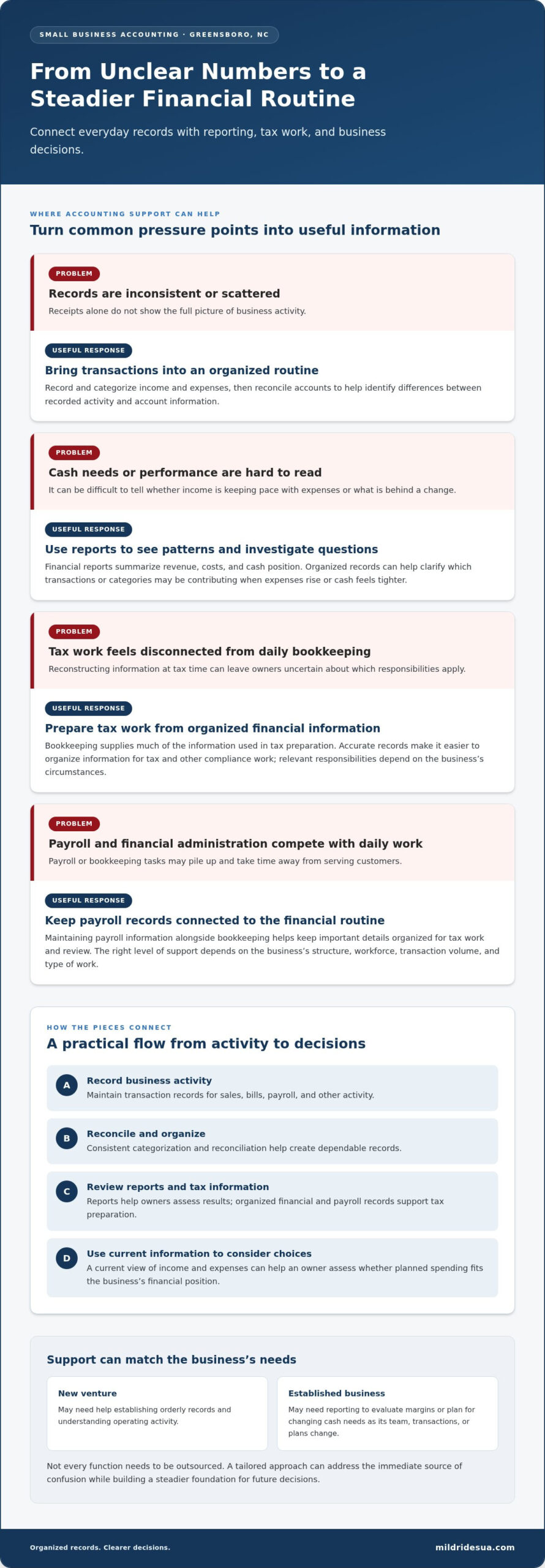
Accounting work can include recording transactions, reconciling accounts, preparing financial reports, maintaining payroll records, and organizing information for tax work. Bookkeeping focuses on maintaining transaction records. Reporting summarizes and interprets those records, such as income and expenses. Together, these tasks help an owner move from “What did we pay?” to “How is the business performing, and what needs attention?”
The right combination depends on the business’s structure, workforce, transaction volume, and type of work. A new venture may need to establish consistent records, while an established company may want reporting that helps evaluate margins or plan for changing cash needs. Accounting information is most useful when it informs decisions, not just year-end paperwork.
When does a Greensboro business need accounting support?
Consider accounting support when records are inconsistent, cash on hand is hard to predict, or financial administration regularly competes with serving customers. Other signs include difficulty explaining whether the business is profitable, uncertainty about upcoming tax work, or payroll and bookkeeping tasks piling up. These issues don’t necessarily mean every function needs to be outsourced. They point to areas where a clearer process or professional guidance may help.
A Greensboro startup may need help establishing orderly records and understanding its operating activity. An established small business may have different priorities as its team, transactions, or plans change. The right services and level of ongoing involvement should reflect the business’s circumstances. A tailored approach can address the immediate source of confusion while building a steadier foundation for future decisions.
How bookkeeping, tax compliance, and advisory work together
Bookkeeping, tax work, and business advice are connected parts of financial management. First, business activity is recorded consistently. Those records can then be organized into financial reports that help an owner assess results and identify questions. Tax preparation uses organized financial information, while proactive planning and advisory support help owners consider choices before they become urgent.
Current financial records make planning more useful because decisions can be based on the business’s actual activity, not estimates assembled after the fact. For example, a current view of income and expenses can help an owner assess whether planned spending fits the business’s financial position. The right small business accounting Greensboro NC support connects day-to-day information with tax and management needs while keeping each responsibility distinct.
How bookkeeping creates a dependable financial picture
Consistent categorization makes it easier to distinguish types of income and expenses. Reconciliation helps identify differences between recorded activity and account information. Financial statements can then show patterns in revenue, costs, and cash position. These reports give owners a more grounded basis for reviewing performance than a folder of receipts or a year-end snapshot.
A useful routine also makes questions easier to investigate. If expenses rise or available cash feels tighter, organized records can help clarify which transactions or categories may be contributing. The monthly bookkeeping guide for Greensboro and High Point businesses offers related guidance on maintaining records over time.
How tax and advisory support build on accurate records
Bookkeeping supplies much of the financial information used in tax preparation. Payroll records add another important set of details for businesses with employees. Keeping these records organized can make it easier to prepare for tax work and review questions that arise. The IRS Small Business and Self-Employed Tax Center provides federal tax information and resources. The specific responsibilities relevant to a business depend on its circumstances.
Tax preparation focuses on reporting financial activity for tax purposes. Tax advisory and proactive planning consider how decisions may affect a business’s tax position, while broader business advisory can address growth strategy, cash-flow management, and management decisions. These functions complement routine bookkeeping, but they aren’t interchangeable. Clean records provide the foundation, and advisory work interprets them in light of the owner’s goals.
For example, an owner considering a new expense or operational change can use current records to assess the decision. The right analysis depends on the company’s structure, financial position, and plans, so recommendations should be tailored rather than assumed. A client-first accounting relationship connects the records with the questions behind them. Mildrid Esua, CPA, PLLC provides small-business accounting support alongside tax and business advisory services, helping owners consider their financial needs as a connected whole.
How to compare small business accounting options in Greensboro
Start by identifying the work your business needs handled, then consider how that work connects to financial decisions over time. A tax return prepared once a year addresses a specific task. An accounting relationship may also include ongoing bookkeeping, payroll, tax planning, and business advice. Neither model suits every owner. The key question is whether the support matches your priorities now and can adapt as they change.
Use this framework to evaluate your small business accounting Greensboro NC needs and the services that can address them:
Service scope: Identify whether your needs include tax preparation, bookkeeping, payroll, tax advisory, or financial review. Compare the services you use with the tasks taking your time or creating uncertainty.
Communication: Consider how information will be shared, how questions will be addressed, and which financial updates will help you make decisions.
Business context: Account for your structure, stage, workforce, and goals. These factors shape the support that is useful to your company.
Advisory availability: Separate help with a defined task from support that can also inform planning, cash-flow management, or business decisions.
Which accounting services fit your business stage?
An early-stage business may prioritize orderly records, business formation considerations, and tax guidance relevant to its circumstances. As operations develop, bookkeeping, payroll, tax compliance, and regular financial review may become more important. Owners seeking broader financial guidance can also consider business advisory or Virtual CFO Services. These aren’t fixed stages or required packages. The appropriate combination depends on what the business is managing now.
For a small company with employees, payroll records need to fit into a broader process for organizing financial information and tax work. A business without employees may have different priorities. Compare services by the responsibilities they help manage, not simply by the length of a service list.
What makes an accounting relationship useful over time?
Clear communication and tailored advice help turn financial information into something an owner can act on. A year-end-only interaction may focus mainly on reporting past activity. Proactive, year-round support can create opportunities to discuss questions as they arise, with advice shaped by the company’s changing circumstances and goals. The strategic tax planning guide for North Carolina entrepreneurs provides further context on planning beyond tax filing.
Local context matters because Greensboro businesses operate within North Carolina’s broader tax and business environment. Location alone, however, doesn’t determine what support is right. Consider whether the services address your small-business accounting needs and whether communication and guidance align with your objectives. Mildrid Esua, CPA, PLLC supports small businesses and entrepreneurs in Greensboro and surrounding North Carolina communities with customized, client-first advice, including Accounting, Bookkeeping, Payroll; Tax Advisory & Compliance; and Business Advisory Services. A useful fit addresses immediate accounting needs while supporting more informed decisions as the business grows.
A practical accounting-readiness plan for Greensboro small businesses
A productive accounting review starts with a clear view of what’s happening and what you need help deciding. You don’t need to resolve every bookkeeping question before seeking support. Organize the information you already have, identify gaps, and describe what’s changing in the business. This preparation helps focus a discussion on practical priorities. It doesn’t guarantee a particular tax result.
Use this sequence to prepare:
- Gather available records. Collect current bookkeeping records, financial reports, relevant bank activity, payroll information, and prior tax returns or filings where available. Note the period each record covers so it’s easier to identify missing information.
- Review current responsibilities. List the financial tasks you handle, such as recording transactions, maintaining payroll information, or preparing for tax work. Mark anything unclear, delayed, or difficult to manage consistently.
- Identify questions and decisions. Write down unresolved accounting questions and upcoming choices, such as hiring, expanding operations, or changing business structure. A specific decision gives an advisor useful context for discussing what information matters.
- Clarify your priorities. Decide whether your immediate need is organized bookkeeping, tax preparation, payroll support, planning, or broader financial guidance. Needs may overlap, but naming the main concern helps frame next steps.
What information should owners organize before a review?
Begin with what’s readily available rather than trying to create a perfect file. Bookkeeping records and financial reports show how transactions have been tracked. Bank activity can help clarify recorded cash movement, while payroll records and prior filings may provide additional context. Pair these materials with a short list of questions, gaps, and business decisions. Together, they give a review a useful starting point without turning preparation into a burdensome project.
Filing requirements and deadlines can depend on the business’s structure and circumstances. Treat a general checklist as a preparation tool, not a determination of what applies to your company. Verify relevant federal and North Carolina requirements for your situation with an appropriate tax professional or official government resources.
How can accounting priorities change as a business grows?
Growth can change a business’s financial picture. Hiring may add payroll-record responsibilities, while expanding operations can increase transaction volume and make timely financial review more valuable. A change in business structure may also affect the questions an owner needs to address. If the business operates across state lines, Multi-State Tax Compliance may become relevant depending on its activities. These developments are reasons to reassess support, not assumptions that every business faces the same obligations.
Review your accounting routine periodically, especially when operations, staffing, structure, or goals change. Ask whether your process still provides the information you need and whether your support covers the right responsibilities. For small business accounting Greensboro NC owners can tailor to their goals, Mildrid Esua, CPA, PLLC provides client-first accounting and tax guidance. More information about the firm’s approach is available through its accounting services.
Small business accounting in Greensboro with Mildrid Esua, CPA, PLLC
Accounting support should reflect the business behind the numbers. Mildrid Esua, CPA, PLLC serves small businesses and entrepreneurs in Greensboro and surrounding North Carolina communities, with a mission to provide practical solutions tailored to each client’s circumstances. The firm’s proactive, client-first approach connects everyday financial administration with tax and business considerations, helping owners address current needs while keeping future decisions in view.
A tailored accounting relationship for local businesses
One business may prioritize consistent books and payroll records. Another may need tax guidance or a clearer way to evaluate business decisions. Support can be aligned with the owner’s circumstances and goals instead of treating each need as an isolated task. The appropriate mix depends on what the business is managing and the guidance it needs.
Mildrid Esua, CPA, PLLC provides:
- Accounting, Bookkeeping, Payroll to support core financial recordkeeping and payroll needs.
- Tax Advisory & Compliance to address tax-related matters and compliance support.
- Business Advisory Services to help owners consider business priorities and decisions.
These services can complement one another. Organized accounting and bookkeeping records provide context for tax work, while advisory discussions connect financial information to the owner’s plans. A Greensboro startup may focus on establishing sound financial routines. An established business may be managing payroll, ongoing records, or its next stage of growth. The firm’s approach responds to each client’s situation rather than assuming every business needs the same mix of services.
For owners seeking small business accounting Greensboro NC, a relationship built around ongoing, customized guidance makes it possible to revisit priorities as circumstances evolve. The focus is not only completing a single task, but creating a practical connection between accounting, tax support, and business needs.
Take the next step with a Greensboro-area CPA
An initial conversation can help you explain what’s working, where financial administration feels difficult, and what decisions are approaching. It can also clarify how bookkeeping, payroll, tax support, or broader business advice relate to your circumstances. You don’t need to arrive with every question resolved. A clear account of your priorities is a useful place to begin.
Mildrid Esua, CPA, PLLC offers a free consultation and provides transparent fee information, so you can discuss your needs and understand the engagement. If you’re ready to consider a more proactive accounting relationship, schedule a free consultation with Mildrid Esua, CPA, PLLC.
Build a financial routine that grows with your business
Your next step doesn’t have to be a complete overhaul. Choose one point of friction, such as delayed records, uncertainty about cash flow, or an upcoming financial decision, and use it to start a more deliberate routine. As your business changes, revisit that priority and consider whether your accounting support still fits. A responsive relationship can help keep financial information relevant to the decisions ahead.
For small business accounting Greensboro NC owners can shape around their circumstances, Mildrid Esua, CPA, PLLC emphasizes customized, proactive, client-first support. A free consultation offers an opportunity to discuss priorities, and transparent fee information helps explain the engagement. The firm serves businesses in Greensboro and nearby communities including High Point, Burlington, Kernersville, Jamestown, Oak Ridge, Summerfield, and Winston-Salem.
With a clear first step and the right guidance, you can build a steadier foundation for the business you’re working toward.
Frequently Asked Questions
How do I know whether my small business needs an accountant or a bookkeeper?
A bookkeeper generally records and organizes transactions, while an accountant can interpret the resulting information and support tax or business decisions. If entries are behind or you spend too much time sorting transactions, bookkeeping may be the immediate need. If you’re unsure what reports mean or how a planned hire could affect finances, accounting guidance may help. Your workload, record quality, and goals shape the right mix.
Can a small business CPA help with payroll and tax planning?
Yes. Payroll and tax planning can be coordinated when a firm provides both, although they address different responsibilities. Mildrid Esua, CPA, PLLC provides Accounting, Bookkeeping, Payroll and Proactive Tax Planning. For example, a business preparing to hire may need payroll support while reviewing tax considerations. The appropriate support depends on the company’s circumstances and plans. Planning doesn’t promise a particular tax result.
What records should I keep for small business accounting?
Keep organized records of business income, expenses, bank activity, payroll, and tax-related documents. For example, retaining invoices alongside the transactions they relate to can make it easier to explain a payment or receipt later. Accessible records help you and your accounting professional understand business activity and investigate questions. Requirements for specific documents can vary with your circumstances, so don’t assume one record list or retention period applies to every business.
When should a Greensboro startup begin working with an accountant?
Consider accounting guidance while forming the business, setting up recordkeeping, preparing for tax responsibilities, or making early financial decisions. For founders in Greensboro and nearby communities such as High Point, Burlington, Kernersville, Jamestown, Oak Ridge, Summerfield, and Winston-Salem, the right timing depends on the business’s activity and structure, not a universal deadline. Organizing transactions early can make later reviews more useful. Owners searching for “small business accounting Greensboro NC” can start by identifying their first financial questions.
Can an accountant help a North Carolina business operating in multiple states?
Yes. A business with activity across state lines may need to consider tax-compliance matters beyond its North Carolina operations, depending on what it does and where. Mildrid Esua, CPA, PLLC provides Multi-State Tax Compliance. For instance, expanding into another state is a useful prompt to review how the change affects the business’s accounting and tax needs. Specific obligations and thresholds should be verified against current requirements.
How can accounting information help a small business prepare for financing?
Organized financial records and reports can help an owner present a clearer account of business activity during financing discussions. Before those conversations, review whether reports are current and whether recorded transactions can be explained. Mildrid Esua, CPA, PLLC provides Bank Financing Assistance. Accounting support can help with preparation, but it can’t guarantee financing approval, access, or favorable terms.
What is the difference between tax preparation and proactive tax planning?
Tax preparation focuses on using financial information to complete applicable returns, while proactive tax planning considers tax matters as business decisions develop. For example, an owner considering a change in operations may want to understand relevant tax considerations before moving forward. Planning and preparation can complement each other, but planning doesn’t replace required filings. Recommendations depend on the business’s facts and current rules, so don’t assume a strategy will produce a particular saving or result.




Leave a Reply
Your email is safe with us.