


An IRS audit isn’t proof of wrongdoing, but figures that stand out can prompt questions. Charitable contributions that seem high relative to income, unusually large business expenses, deductions that exceed earnings, or repeated Schedule C losses may attract scrutiny. An IRS audit defense CPA in Greensboro can help organize records and prepare clear, well-supported responses.
It’s understandable to wonder whether to handle an audit yourself, what representation may cost, and how much documentation the IRS will expect. The right response depends on the notice, the issues under review, and the records supporting your return. A careful, timely approach helps keep the process focused on the facts.
This article explains potential audit triggers, when professional representation may help, and what affects fees, without suggesting one price fits every case. You’ll also learn what evidence may matter and how a representative can manage IRS correspondence and discussions, helping you decide what to do after receiving a notice.
Key Takeaways
- A CPA can represent you before the IRS and manage audit correspondence, helping keep responses organized and focused on the issues under review.
- Responding to an audit notice promptly matters; ignoring it can lead to further notices and a proposed tax deficiency.
- Audit defense costs depend on the scope of the review, the records involved, and the work needed to prepare and respond.
- Business audits may examine whether reported income and claimed deductions are supported, so clear records are central to a well-prepared response.
- Thoughtful evidence preparation can help address IRS and state tax questions with a consistent, fact-based account.
Can a CPA represent me in an audit?
Yes. A CPA can represent you before the IRS, manage audit correspondence, and communicate with an auditor. The scope depends on your authorization and the issues identified in the audit notice.
IRS Communication and In-Person Representation
Many IRS audits are handled by correspondence, while others involve meetings with an auditor. A tax professional can organize responses, review the requested records, and represent you in person. Before proceeding, clarify who will handle IRS letters, prepare responses, attend meetings, and explain decisions or next steps.
To authorize representation, taxpayers use Form 2848, the power of attorney form for representation before the IRS. This authorization allows the named representative to act within the authority granted on the form. A practical first step is matching the authorization to the tax matters and periods on the audit notice. Keep copies of submitted correspondence and IRS replies in one case file.
Comparing Tax Representatives
A CPA, enrolled agent, or tax attorney may be considered for IRS audit defense. Compare each representative’s credentials, relevant audit experience, and familiarity with the records involved. For example, a business-income review may call for someone who can trace receipts and deductions through bookkeeping records. Ask who will manage correspondence and attend any meetings.
For a CPA, look for the CPA credential and experience with IRS audits; for an enrolled agent or tax attorney, assess the relevant tax background and case experience. In Greensboro, seek a representative who can explain the audit notice, define the work, and describe how updates will be shared. Clear answers help you judge fit before authorizing representation.
The Internal Revenue Service states that the U.S. accuracy-related penalty under IRC Section 6662 is 20% of the underpayment. That makes the records and reasoning behind a disputed item important. A representative can organize evidence around the IRS’s specific questions, rather than sending unrelated documents. For a foreign-account issue, the Financial Crimes Enforcement Network identifies an aggregate balance exceeding $10,000 at any point during the year as an FBAR filing threshold.
Representation can also address tax lien or levy notices. A representative can review the notice and relevant account information, then communicate with the IRS about the matter. Bring the notice and related tax records so the response addresses the issue raised. A lien or levy may involve tax resolution work beyond the audit itself, so clarify which matters the representation will cover.
Before signing an authorization, identify the tax periods, issues, and tasks involved. Ask whether the representative will prepare written responses, participate in meetings, and explain IRS communications as they arrive. These details define the scope of representation and help keep each response connected to the audit record.
What happens if I ignore the audit notice?
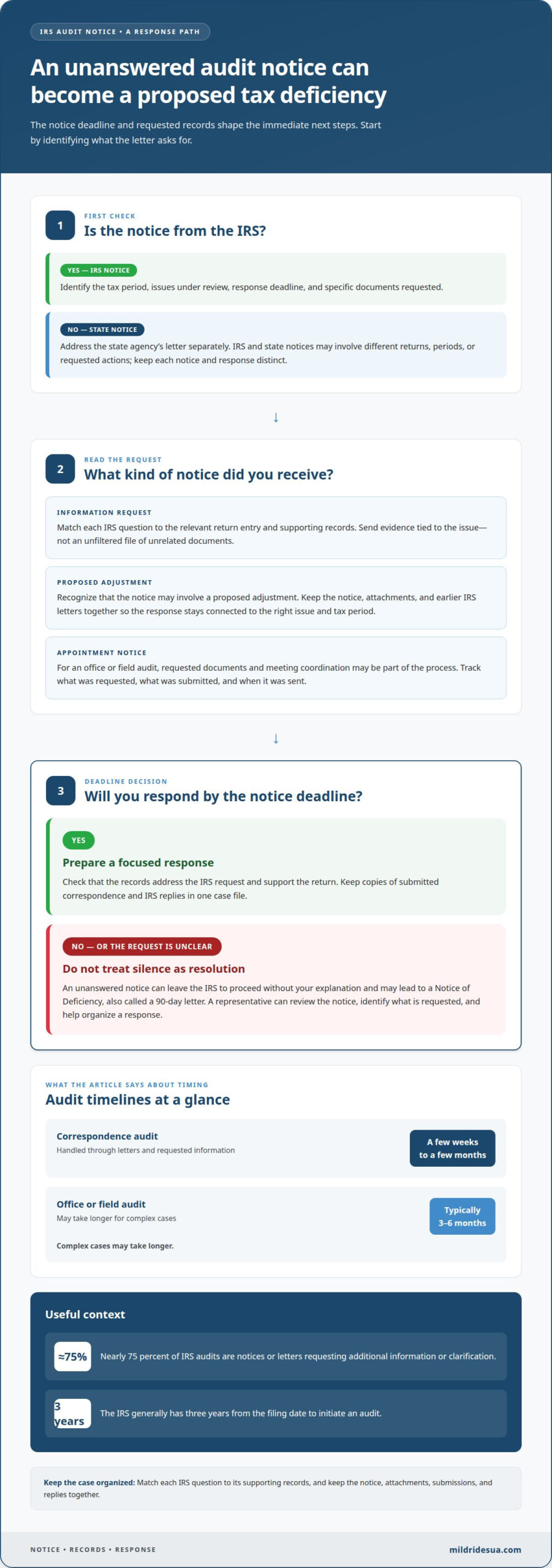
Ignoring an IRS letter can allow an information request to become a proposed tax deficiency. The notice’s response deadline and requested records determine the immediate next steps.
Audit Timelines and Consequences
Correspondence audits can take from a few weeks to a few months to resolve. Office and field audits typically take three to six months, sometimes longer for complex cases. If you ignore an audit notice, the IRS may issue a Notice of Deficiency, also called a 90-day letter. That makes the original letter’s deadline and requested response important.
Nearly 75 percent of IRS audits are notices or letters requesting additional information or clarification. A formal audit letter may notify you of selection and ask you to call to confirm an appointment. The IRS generally has three years from the filing date to initiate an audit. An unanswered notice doesn’t resolve the matter; it can leave the IRS to proceed without your explanation.
Notice and Document Review
A representative reviews the notice to identify the tax period, issues, response deadline, and specific documents requested. Before a response goes to the IRS, the representative can check that the records address the request and support the return. For example, a question about a deduction calls for evidence tied to that deduction, not an unfiltered file of unrelated records.
Reviewing the notice also helps distinguish an information request from a proposed adjustment or appointment notice. The representative can match each IRS question to the relevant return entry and supporting records, then prepare a focused response. Keep the notice, attachments, and earlier IRS letters together so the response stays tied to the right issue and tax period.
For an office or field audit, a representative can coordinate communications, organize requested documents, and help manage the meeting. These audits may take longer than correspondence reviews, particularly when the issues or records are complex. Tracking what the IRS requested, what was submitted, and when it was sent keeps the case organized and makes follow-up easier.
IRS and state tax notices may involve different returns, periods, or requested actions. First identify the issuing agency and the issue. For an IRS inquiry, the representative can address the federal request; for a state notice, the response must address that state agency’s letter. Keeping each notice and response separate reduces confusion.
How much does IRS audit defense cost?
IRS audit defense fees depend on the work required, not simply the length of the return. The scope often turns on which income items, deductions, and tax periods the IRS questions. A focused correspondence review involves different work from a business audit requiring several records and calculations. The fee depends on the case and is provided after a quote request. The complexity and volume of records help determine the scope.
The IRS often examines whether reported income is complete and claimed deductions qualify under tax law. For a business, the review may involve sales records, bank deposits, invoices, receipts, and bookkeeping entries. A tax professional compares these records with the return and the IRS’s questions. Missing or inconsistent documentation can require additional analysis, making the response more involved than a narrow document request.
Schedule C audits can require tracing business income and expenses across operating records. For example, an IRS audit scenario reports $75,000 in income and $60,000 in deductions. That relationship may draw scrutiny, but the figures alone don’t establish an error. The representative needs to assess how each reported amount connects to the taxpayer’s records and business activity before preparing a response.
Vehicle deductions show why evidence and claim details matter. In one example, $12,000 in vehicle expenses were claimed, but records substantiated only $8,500. The IRS adjusted $3,500 of the claimed expenses. For a case involving vehicle use, the representative examines the claim and supporting records together. The amount of reconciliation required can affect the time and scope of audit defense.
Individual income tax correspondence may be narrower, especially when the IRS asks about a specific return item. Even then, the representative needs to understand the question, connect the requested records to the return, and prepare a clear response. A return with several disputed deductions or income sources may need more analysis than one straightforward question. The number of issues and records affects the work involved.
North Carolina income tax also matters when a notice concerns a state return. North Carolina’s income tax rate is a flat 4.75%. A state review is distinct from an IRS audit, so the notice’s issuing agency and tax period guide the response. If federal and state questions overlap, the representative may need to organize separate records and communications for each agency.
To understand a proposed fee, define the requested work before representation begins. Clarify whether the scope includes reviewing the notice, analyzing income and deductions, preparing written responses, and handling follow-up communications. A field audit or multiple tax years may require broader work than correspondence about one item. A clear scope connects the quoted fee to specific tasks, records, and issues.
Bookkeeping records can make an audit review more orderly, but gaps may require reconstruction or reconciliation. The representative assesses whether bank activity, invoices, expense records, and reported figures align. For Schedule C returns, the relationship between business income and deductions can guide the review. The practical cost driver is the work needed to resolve discrepancies and support the return, not a general industry price.
IRS and state tax audit defense
IRS and state audits can involve different agencies, notices, and records. Identify the agency, tax period, and issue in each notice first. This helps keep federal and state responses separate, even when both reviews concern the same income or business activity.
Being selected for an audit doesn’t always mean the IRS suspects intentional wrongdoing. The IRS may select National Research Program audits randomly and without cause to study taxpayer behavior and gather data. In any audit, representation starts by understanding the questions and matching each one to the return and supporting records.
A federal audit and a North Carolina tax dispute require separate attention to each agency’s notice. A representative can sort correspondence by agency and tax period, identify overlapping issues, and prepare responses for the appropriate authority. For example, a federal question about business income may also affect information reviewed in a state matter, but each agency’s request still needs a direct response.
The work may include reviewing the notice, organizing records, communicating with the agency, and explaining a proposed adjustment. If the IRS or a state agency changes a return item, a tax professional can assess the decision and appeal it if needed. An appeal should address the agency’s stated reasoning and relevant evidence, rather than repeat unrelated facts.
Some IRS questions involve a taxpayer’s answers or requests to extend the review period. The Fifth Amendment right to remain silent applies to questions from the IRS, though how to respond depends on the circumstances and the question asked. The IRS may also ask taxpayers to extend its assessment period using Form 872. A representative can explain the request and its implications before the taxpayer decides whether to sign.
The assessment statute of limitations is typically three years, or six years for a substantial understatement of income. These periods make the return year and filing history important when assessing an IRS notice. A representative can identify the tax period under review and whether the notice raises a question about that return. Organize communications and records by year to avoid confusing evidence from different periods.
State coverage becomes relevant when a taxpayer receives notices from more than one state agency. Track each notice separately, including its issuing agency, tax period, requested information, and response status. A representative can coordinate records and communications across the matters while tailoring each response to the agency’s questions. This is especially relevant when business activity or income involves multiple state returns.
Serious allegations require careful, fact-based handling. Intentional underreporting can result in a U.S. civil fraud penalty of 75%. That potential consequence makes it important to distinguish an inaccurate entry from alleged intent and to address the evidence raised by the agency. A representative can evaluate the stated issue, organize relevant documentation, and communicate a response grounded in the facts of the case.
How does a CPA prepare evidence and audit responses?
A strong response connects each IRS question to specific evidence and a clear explanation. A CPA starts by identifying the tax year, return entries, and documents named in the notice. Defining that scope prevents unrelated records from obscuring the issue. During an initial consultation, the representative can also clarify who will gather records and how questions will be handled.
Next, the CPA traces each requested item to its source. For business income, this may mean following reported amounts through accounting records, invoices, deposit records, and the filed return. For a deduction, the review connects the return entry to receipts, statements, or other supporting documents. The goal is to show how the evidence supports the reported treatment, not simply send a large collection of files.
A useful evidence file can be organized around the IRS’s questions:
- Income: Match the relevant return entry with records showing the source and amount.
- Expenses: Group receipts and statements by the deduction the IRS is reviewing.
- Business records: Reconcile bookkeeping entries with underlying documents and the filed return.
- Prior correspondence: Keep IRS letters and earlier responses together, so the reply addresses the current request.
For each item, the CPA checks whether dates, amounts, and descriptions align across records. If a bank deposit differs from the income recorded in the books, the difference needs a factual explanation and relevant supporting evidence. If documentation is incomplete, the response should accurately describe what the available records show. Unsupported assumptions can create confusion instead of resolving the IRS’s question.
The written response should follow the notice’s structure. A CPA can address each IRS question directly, identify supporting documents, and explain how they relate to the return. Clear labels and cross-references help the reviewer connect each statement with its evidence. A concise explanation can also distinguish a disagreement from a missing record or bookkeeping discrepancy.
Before submission, the CPA reviews the explanation, evidence, and return entries for consistency. The representative can keep a copy of the submission and track later IRS communications. If the IRS asks a follow-up question, the existing file helps the CPA respond in context rather than rebuild the case from scattered records.
Careful preparation turns accounting records into a coherent account of the tax return. If an IRS notice raises questions about your evidence or response, request a consultation to discuss representation and the records involved.
Mildrid Esua, CPA, PLLC
Mildrid Esua, CPA, PLLC provides IRS representation for individuals and small businesses facing audit questions, tax notices, or other tax concerns. As part of its tax resolution services, the firm can help review the issues, organize supporting information, and manage IRS communications. This support may help when a notice questions income or deductions, when you need professional representation, or when audit concerns overlap with back taxes or a tax lien.
Bring the audit notice and related tax records to your discussion. These details help clarify what the IRS is asking and what response work may involve. Contact Mildrid Esua, CPA, PLLC to discuss your IRS audit concerns and representation needs.
Turn the audit response into a stronger path forward
An audit can also reveal where a business’s accounting process needs clearer documentation or more consistent review. After addressing the IRS’s questions, consider how the findings could inform future recordkeeping and tax decisions. This forward-looking approach can make later filings easier to explain and support.
Choosing an IRS audit defense CPA in Greensboro gives you a professional point of contact to assess your next steps. Bring the notice and relevant records to the discussion, then identify unresolved questions and the decisions ahead. The right support depends on your circumstances, so a focused conversation can help clarify how to proceed.
Contact Mildrid Esua, CPA, PLLC to discuss your audit concerns and possible next steps. A clear plan can help you move forward with greater confidence.
Frequently Asked Questions
What Can Trigger An IRS Audit?
Unusual figures or patterns can draw IRS scrutiny, but they don’t prove a return is wrong. Examples include charitable contributions that seem high relative to income, unusually large business expenses, and deductions exceeding earnings. A history of prior audits or an unusually high number of dependents can also prompt questions. Repeated Schedule C losses over five consecutive years may receive scrutiny under hobby-loss rules.
How quickly can you stop a wage garnishment or bank levy?
There isn’t one timeframe for every garnishment or levy. The next step depends on the IRS notice, the status of the collection action, and the tax account details. A representative can review those facts, communicate with the IRS, and assess the tax resolution work involved. Gather the notice and recent IRS correspondence, which show what action has already occurred.
Ready to Resolve Your IRS Problem in Greensboro?
Yes, professional IRS representation can help you address an audit, tax notice, back taxes, or a tax lien. For an initial discussion, identify the notice or issue, the tax period involved, and any response deadline shown. Mildrid Esua, CPA, PLLC provides IRS representation and tax resolution services for individuals and small businesses. This support can clarify the work needed to address your specific tax concern.
What does an IRS audit defense CPA do?
An IRS audit defense CPA in Greensboro evaluates the audit issue, reviews relevant tax records, and prepares responses tied to the return. For example, if the IRS questions a business expense, the CPA can assess how the entry relates to available accounting records and supporting documents. The CPA can also manage IRS communications and explain the choices raised by the audit, helping you make informed decisions about your response.
How much does IRS audit representation cost in Greensboro, NC?
The fee depends on the case and is provided after a quote request. Factors include the number of tax periods and issues, the volume and organization of records, and whether the work involves correspondence, meetings, or follow-up. A focused question about one return item requires a different scope from a business audit involving several income sources. Defining the requested work helps clarify what the fee covers.
How can a CPA help after I receive an IRS audit notice?
An IRS audit defense CPA in Greensboro can assess the notice’s purpose, identify what the IRS is asking, and organize a response around those questions. For instance, a letter seeking clarification about an income item calls for records connected to that item, not unrelated paperwork. A representative can also track later correspondence and explain what each communication means for the case. This creates a coherent response history as the audit progresses.
What records and documents should I provide to my CPA for an IRS audit?
Start with the audit notice, the tax return under review, and any IRS letters you’ve received. Then provide records connected to the specific questions, such as invoices, bank statements, receipts, or bookkeeping reports. For a business-income question, records showing how deposits relate to reported income can help explain the figures. After reviewing the notice and return, the CPA can identify other relevant documents.
Can a CPA represent me before the IRS, and what authorization is required?
Yes. A CPA can represent a taxpayer before the IRS when properly authorized. Form 2848 is used to authorize representation, and the taxpayer should ensure its listed matters match the audit issue and tax period. The representative can then act within the authorization granted. Discussing the form’s scope before submission helps clarify which IRS communications and matters the CPA is authorized to handle.




Leave a Reply
Your email is safe with us.