

Growing sales can create a cash shortage rather than solve one. Managing cash flow for a small business means keeping enough cash available as customer payments arrive and operating costs come due. Problems often begin when you pay to produce goods or deliver services before customers pay. Growth can add pressure by requiring more working capital, inventory, or customer credit.
It’s frustrating to see revenue rise while cash feels tight, especially when payroll, rent, taxes, and supplier bills still need attention. A forecast can reveal a shortfall before it disrupts operations. This article explains how accounting software and regular bookkeeping improve visibility, how forecasting helps anticipate cash needs, and how clear payment practices can support steadier inflows. It also covers why growth can strain cash and how planning for its costs supports informed decisions.
Key Takeaways
- Track cash coming in and going out, and keep bookkeeping current so potential pressure is visible sooner.
- Use a cash flow forecast to map expected income against upcoming bills and spot likely shortfalls ahead of time.
- Set clear customer payment terms, invoice promptly, and follow up consistently when payments are overdue.
- Plan for growth-related demands on working capital, inventory, and customer credit before expanding.
- Connect bookkeeping and tax planning to a clearer view of business finances and more informed decisions.
1. Why is managing cash flow so important?
Cash flow shows whether a business can meet near-term obligations with money actually available. Profit measures what remains after costs are deducted, but profitable sales don’t guarantee cash is on hand when bills fall due. For example, a Greensboro business may pay for materials and labor before a customer pays an invoice. That timing gap can squeeze working capital even as sales rise.
Effective cash flow management combines a forecast, prompt collection of customer payments, careful expense timing, and a dedicated reserve. Compare expected inflows with payroll, rent, taxes, supplier, and equipment costs, then adjust spending before a shortfall becomes urgent. A business can also arrange a line of credit in advance as potential short-term funding if receipts arrive later than expected.
How much cash reserve should a small business keep? Financial experts commonly recommend three to six months of operating expenses as a starting point, while financial advisors recommend at least three months’ worth as an emergency fund. If that target feels distant, build gradually: first aim to cover one month of costs, then work toward two or three months as cash allows.
Base the reserve on actual operating needs, not a round figure detached from the business. Add essential outflows, including payroll, rent, taxes, and supplier payments, then set aside part of surplus cash after covering those obligations. Keep the reserve available for disruptions rather than treating it as routine spending. A cash flow forecast helps show when a transfer is manageable and when upcoming payments require the surplus.
Cash reserves matter during periods of change, too. A new contract may require materials or extra labor before payment; a seasonal slowdown can reduce receipts while fixed costs continue. Before buying equipment or increasing inventory, map the expected cash outlay and collection timing. This shows whether existing capital can cover the commitment or whether financing merits consideration.
Short-term funding and reserves serve different purposes. A reserve is cash already set aside; a business line of credit can provide access to funds when needed, with borrowing repaid under its terms. Planning for either option before a shortfall gives owners more room to assess timing and costs. The Internal Revenue Service describes a Report of Cash Payments requirement for payments over $10,000, another reason to keep payment records organized alongside cash planning.
2. Accounting software and financial dashboards
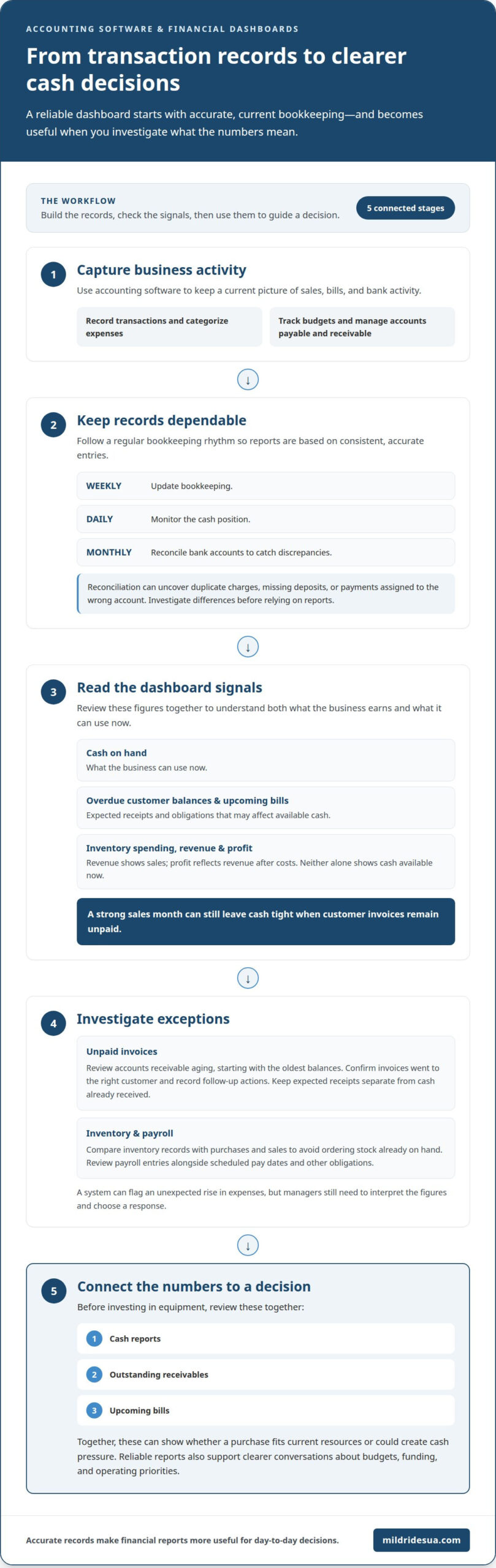
Accounting software turns sales, bills, and bank activity into a current picture of business finances. Use it to record transactions, categorize expenses, track budgets, and manage accounts payable and receivable. A dashboard can bring these figures together, helping you see whether cash is available for payroll, suppliers, or planned purchases. Its value depends on consistent, accurate entries, not the dashboard alone.
Choose a small-business accounting system that organizes cash activity and produces reports useful for decisions. Review cash on hand, overdue customer balances, upcoming bills, inventory spending, revenue, and profit. These measures answer different questions: revenue shows sales, profit reflects revenue after costs, and cash position shows what the business can use now. A strong sales month can still leave cash tight if invoices remain unpaid.
Set a regular routine to keep records dependable. Update bookkeeping weekly, monitor the cash position daily, and reconcile bank accounts monthly to catch discrepancies. If a bank transaction appears in the account but not the books, investigate and correct the entry before relying on reports. Reconciliation can also reveal duplicate charges, missing deposits, or payments assigned to the wrong account.
Use the dashboard to review accounts receivable aging, which groups unpaid invoices by how long they have been outstanding. Start with the oldest balances, confirm invoices were sent to the right customer, and record follow-up actions. For example, if a completed job appears unpaid, check whether the invoice was issued and whether the payment was recorded in the right period. This keeps expected receipts separate from cash already received.
Inventory and payroll deserve focused attention because both affect cash planning. Compare inventory records with purchases and sales to avoid ordering stock that’s already on hand. Review payroll entries alongside scheduled pay dates and other obligations. An up-to-date system can flag an unexpected rise in expenses, but managers still need to interpret the figures and choose an appropriate response.
Financial reports are most useful when they support a specific decision. Before investing in equipment, review cash reports, outstanding receivables, and upcoming bills together. This combination can show whether the purchase fits current resources or could create pressure. Reliable reports also give owners a clearer basis for discussing budgets, funding, and operating priorities.
For Greensboro businesses that need more consistent records, small business bookkeeping support can help organize transactions and maintain usable financial reporting. A disciplined recordkeeping process gives each dashboard figure a clearer foundation for day-to-day decisions.
3. Cash flow forecasting
A cash flow statement records cash entering and leaving the business, while a forecast estimates what may happen next. Keeping them distinct helps owners compare actual results with expectations. For example, a statement may show that a customer payment arrived later than planned. The forecast can then reflect that timing and reveal whether upcoming obligations still fit available cash.
Build a monthly cash flow forecast using past sales, customer payment patterns, and expected expenses. List income by its likely receipt date, not just the date a sale is recorded. Add expenses when payment is due, including payroll, rent, taxes, suppliers, and planned equipment purchases. This timing-based view can expose shortfalls an income statement may not make obvious. For owners, managing cash flow for small business operations starts with realistic dates for receipts and payments.
Separate dependable income from uncertain revenue. A signed contract with a known payment schedule provides a firmer forecast entry than a prospective sale. For invoices, estimate receipt timing based on the customer’s established payment behavior. If a customer regularly pays late, forecasting only for the due date can overstate the cash available for bills.
Break expenses into fixed commitments and costs that change with activity. Rent and scheduled payroll are easier to anticipate; materials and inventory purchases may rise when orders increase. Use recent records to estimate variable expenses, then revise those assumptions when supplier prices, staffing needs, or sales plans change. A forecast is more useful when each major estimate has a clear basis.
Compare forecasted cash with expected outflows for each month. If projected income falls short before payroll or rent is due, identify the gap early. Possible responses include delaying a flexible purchase, following up on outstanding receivables, or adjusting planned spending. A forecast doesn’t create cash, but it gives owners time to choose a measured response.
Regularly compare the forecast with actual results and update it as information arrives. If revenue exceeds expectations, confirm the related cash has been collected before treating it as available. If an unexpected expense appears, record its timing and effect on the remaining balance. This ongoing comparison helps explain differences between the forecast and statement, rather than letting an outdated estimate guide decisions.
Positive cash flow means more cash comes in than goes out during the period under review. A positive result for one month doesn’t automatically mean every upcoming payment is covered. Use the forecast to test the timing of receipts and expenses, and adjust assumptions when customer payments, sales volume, or operating costs shift. This makes forecasting a practical part of managing cash flow for small business growth.
4. Customer payment terms and overdue invoice reminders
Invoice promptly so the customer’s payment period starts without avoidable delay. For a completed service or delivered order, send an accurate invoice the same day when practical. Include the due date, accepted payment methods, and clear payment terms, such as Net 15 or Net 30. Consistent details help customers understand what they owe and when payment is expected.
Choose terms with the business’s own obligations in mind. A customer may take 30, 60, or 90 days to pay, while payroll, rent, or supplier invoices fall due sooner. That mismatch can leave a profitable business short of available cash. Before agreeing to extended terms, consider the work’s upfront costs, the customer’s payment history, and whether a deposit or staged payments would better match costs to receipts.
Make follow-up part of the invoice process rather than an occasional reaction. Review unpaid invoices regularly, confirm that each invoice reached the right contact, and send a courteous reminder when payment becomes overdue. A reminder at 7 days past due can prompt action; if the balance remains unpaid, follow up again with the due date and outstanding amount. Apply any late-payment penalties only when they’re part of the agreed terms, and address overdue balances consistently.
Supplier payment terms also affect cash flow. Track each due date and discuss flexible schedules before a payment becomes difficult. If a supplier offers 45-day terms, paying near the end of that period can preserve working cash, provided the payment arrives on time and avoids late fees. Early-payment discounts can make sense when surplus cash is available and the savings justify paying sooner.
Schedule outgoing payments around due dates and operating priorities. Separate essential commitments, such as payroll and taxes, from expenses with flexible timing. Use a cash flow calendar to place customer receipts alongside supplier payments. For example, if a customer’s payment is expected after a supplier bill is due, plan for the gap instead of treating an unpaid invoice as available cash.
Positive cash flow depends partly on payment timing, not simply on the number of invoices issued. Keep clear records of invoice dates, terms, reminders, and receipts. These records reveal which customers routinely pay late and which income sources arrive predictably. Use those patterns to refine future terms and follow-up timing while maintaining professional customer relationships.
For a large order or contract, consider requesting an upfront deposit or dividing the balance into staged payments. This connects incoming cash to delivery milestones instead of relying on one large payment at the end. Combined with prompt invoicing, clear terms, and scheduled supplier payments, this approach can make cash commitments easier to anticipate.
5. Cash flow challenges during business growth
Growth can increase cash demands before it increases available cash. A Greensboro company winning larger orders may need more inventory, labor, or equipment before customers pay. Sales revenue can rise while working capital tightens, especially when the business extends credit to customers. Plan for the cash needed to deliver each sale, not just the revenue it may generate.
A profitable quarter doesn’t eliminate timing pressure. For example, a business may record a large contract as revenue while paying suppliers and staff before collecting the customer’s balance. Map the costs and expected receipts for each major project. If delivery requires substantial upfront spending, consider whether staged customer payments can align incoming cash with production and fulfillment costs.
Expansion also changes regular operating needs. Hiring staff adds payroll commitments; carrying more inventory ties up cash in products that may take time to sell. Before adding capacity, forecast the related expenses and expected collection dates. Compare the forecast with current cash and existing commitments, then decide whether to phase the investment or adjust its timing.
Include tax payments in the growth plan. U.S. tax payment timing and obligations affect cash available for expansion, so set aside money monthly or quarterly for estimated annual taxes. As revenue and business activity change, revisit the amount reserved in light of the business’s tax circumstances. Treating tax funds as operating cash can leave a gap when payment is due.
Use accounting software to compare actual sales, expenses, and receivables with the growth plan. If new orders increase inventory purchases faster than customer payments arrive, the records can reveal the gap early. Update the cash flow forecast when hiring, supplier commitments, or customer terms change. This helps owners see whether growth is generating usable cash or simply increasing activity.
Credit can help bridge a temporary gap, but it shouldn’t replace a plan for recurring costs. Before relying on short-term funding, identify the specific timing mismatch and expected source of repayment. A delayed customer payment differs from an expansion whose ongoing expenses exceed its cash returns. That distinction helps owners choose a measured response and avoid borrowing without a clear repayment path.
Establish decision points before expansion begins. Review projected cash needs, customer payment timing, inventory requirements, payroll, and tax reserves together. If the forecast shows pressure, consider phasing purchases, negotiating customer milestones, or revising the launch schedule. Get support planning for business growth with cash needs and tax obligations in view.
Mildrid Esua, CPA, PLLC
Mildrid Esua, CPA, PLLC helps small businesses bring bookkeeping, accounting, and tax planning together for a clearer financial picture. This support is useful when rising sales, overdue customer payments, payroll, or tax obligations make it difficult to understand how much cash is available and when expenses fall due.
Accurate records provide a stronger foundation for reviewing income and outflows, while forward-looking tax planning helps owners account for tax obligations as they make business decisions. If growth or uneven payment timing is putting pressure on cash, an accountant and tax advisor for small businesses can help organize the financial details and inform next steps.
For guidance on your business’s accounting and cash flow, contact Mildrid Esua, CPA, PLLC.
Make Cash Decisions Part of Your Growth Plan
Make cash review part of how you evaluate business decisions, not a task reserved for tax season or a difficult month. Before committing to a new hire, larger order, or expansion, consider how the decision affects available cash and the timing of future obligations. A disciplined approach to managing cash flow for a small business can help you make deliberate choices rather than urgent reactions.
That discipline also benefits from an informed view of the business’s accounting and tax position. Mildrid Esua, CPA, PLLC works with small businesses on accounting and tax matters that shape financial planning. If you’re ready to discuss your business’s needs and next steps, contact Mildrid Esua, CPA, PLLC.
Steady, informed decisions can help you pursue growth with a clearer view of the financial commitments ahead.
Frequently Asked Questions
What causes cash flow problems for small businesses?
Cash flow problems often arise when payments and receipts happen at different times. A business may pay for materials, labor, or inventory before collecting from customers. Growth can widen this gap if larger orders require more upfront spending or customers receive longer payment terms. Unplanned expenses, tax obligations, and slow invoice collection can add pressure, even when sales and reported profit look healthy.
Why is managing cash flow so important?
Cash flow management helps owners decide which commitments the business can meet and when. Without a clear view of expected receipts and payments, an owner might commit to a purchase just before payroll or supplier bills are due. Reviewing available cash alongside upcoming obligations supports informed choices about spending, hiring, and expansion. It also helps identify a developing squeeze while there’s still time to respond.
What’s the difference between cash flow and profit?
Profit is revenue remaining after costs are deducted; cash flow tracks money actually entering and leaving the business. For example, a company can complete a profitable job and record the revenue, but still lack the cash until its customer pays. Conversely, payment for an earlier sale can improve available cash without representing new revenue in that period. Both measures matter, but they answer different financial questions.
How do I create a cash flow forecast for a small business?
Start with the current cash balance, then list expected receipts and payments by the dates they’re likely to occur. Use past sales and collection patterns to estimate customer receipts, and include payroll, rent, taxes, supplier bills, and planned purchases. Compare projected balances across the coming months. After each period, review estimates against actual results and revise assumptions when sales, costs, or payment timing changes.
How can I improve small business cash flow quickly?
Start by identifying cash that may arrive soon and payments with flexible timing. Follow up on overdue invoices, confirm recently completed work has been billed, and contact suppliers before a due date if timing is difficult. Pause discretionary purchases until essential commitments are covered. These steps can ease immediate pressure, but recurring gaps call for a forecast to reveal whether sales timing, costs, or customer terms need adjustment.
How do I manage accounts receivable and reduce late payments?
Send a complete invoice promptly, with the due date, payment terms, and payment instructions clearly shown. Track each unpaid balance by customer and invoice age, then follow up consistently. A reminder at 7 days past due can prompt attention; include the invoice details and a direct request for payment. If a customer disputes a charge, resolve the issue promptly and document the agreed next step.
How can I negotiate supplier payment terms to improve cash flow?
Raise payment timing needs with suppliers before an invoice becomes overdue. Explain the payment schedule your business can reliably meet, then discuss whether a different due date or payment plan works for both parties. Review any proposal against incoming customer receipts and other commitments. Agree clearly on revised terms, record them, and pay as agreed. This supports planning while preserving a professional supplier relationship.
What’s the difference between a small business cash flow statement and a profit and loss statement?
A cash flow statement shows cash received and paid during a period, while a profit and loss statement reports revenue and expenses used to determine profit. A sale made on credit may appear as revenue before the customer pays, so the profit and loss statement can show a sale while cash remains uncollected. Read both reports together to understand business performance and available funds.




Leave a Reply
Your email is safe with us.