


A bookkeeper does more than enter transactions. They track income and expenses, reconcile accounts, manage payables and receivables, and prepare financial reports. If you hire a bookkeeper for your small business, the right fit can improve cash-flow visibility and free up time to run the business. Depending on the agreed scope, bookkeeping may also include payroll.
Look beyond the hourly rate: accuracy, relevant experience, communication, and familiarity with your business all affect the value of the relationship. Costs depend on the scope of work, transaction volume, software, and level of support; the price is provided after a quote request. Use these factors to assess a bookkeeper’s experience and fit, including whether they understand how your business earns and spends money.
Key Takeaways
- Weigh the time and financial clarity a bookkeeper can provide against the cost and oversight involved in outsourcing.
- Compare pricing by the work included, its complexity, and the level of support you need, not by the rate alone.
- Match bookkeeping responsibilities to your actual needs, from account reconciliation to payroll and financial reporting.
- Assess practical experience, software familiarity, communication, and attention to detail when evaluating a bookkeeper.
- Look for someone who understands your business model and can make your financial records more useful for decisions.
1. What are the pros and cons of hiring a bookkeeper?
A bookkeeper can take recurring financial tasks off your plate and give you clearer records for decisions. Outsourcing bookkeeping can save business owners five to 10 hours a week, time you could redirect toward customers, operations, or growing the business. A bookkeeper can also reconcile accounts, flag discrepancies before they become larger problems, and track cash flow so you can see when funds are coming in and going out. If you catch yourself asking, “Should I hire a bookkeeper for my small business?”, start by listing the tasks that consume your week.
There are trade-offs. Hiring adds a recurring expense and requires time to explain your processes, share records securely, and review the work. If your transactions are simple and you already keep accurate financial records, external support may be more than you need. If records are late or unclear, errors can make decisions harder and costly to correct. According to the U.S. Bureau of Labor Statistics, the median annual wage for bookkeeping, accounting, and auditing clerks was $50,670 in May 2025. That figure describes an employee occupation, not the price of freelance or firm-based bookkeeping.
Should I hire an in-house bookkeeper, freelancer, or bookkeeping firm? Choose an in-house bookkeeper when daily, on-site support and close coordination matter. A freelancer may suit a defined workload that can be handled remotely, while a firm may fit a business seeking ongoing outside support. Compare the scope, communication, and access to records before deciding. Match the arrangement to the work that needs attention.
When should a small business hire a bookkeeper? Consider it when transactions, payroll, or reconciliations regularly take time away from core work. It may also be time to get support if you can’t confidently explain your cash position or prepare reliable reports from current records. Start by listing the tasks that are falling behind, then identify the support needed to bring them up to date.
Fit matters as much as workload. Look for experience with businesses like yours, familiarity with your accounting software, and the ability to explain financial information plainly. Ask how the bookkeeper handles reconciliations, flags unusual transactions, and communicates questions. Trustworthiness, confidentiality, and sound judgment are essential because financial records can contain sensitive information. Clear processes for sharing records and reviewing completed work establish accountability from the start.
- Pros: Less time spent keeping books, more consistent records, earlier visibility into discrepancies, and support with cash-flow tracking or budgeting.
- Cons: Added expense, onboarding effort, and a need to maintain oversight and protect access to sensitive records.
Before hiring, define the work and how you’ll assess it. Decide which accounts need reconciliation, which reports you need, and how often you want updates. A written scope reduces confusion about responsibilities and gives you a useful basis for reviewing the arrangement as your business changes.
2. Bookkeeper costs and hourly rates
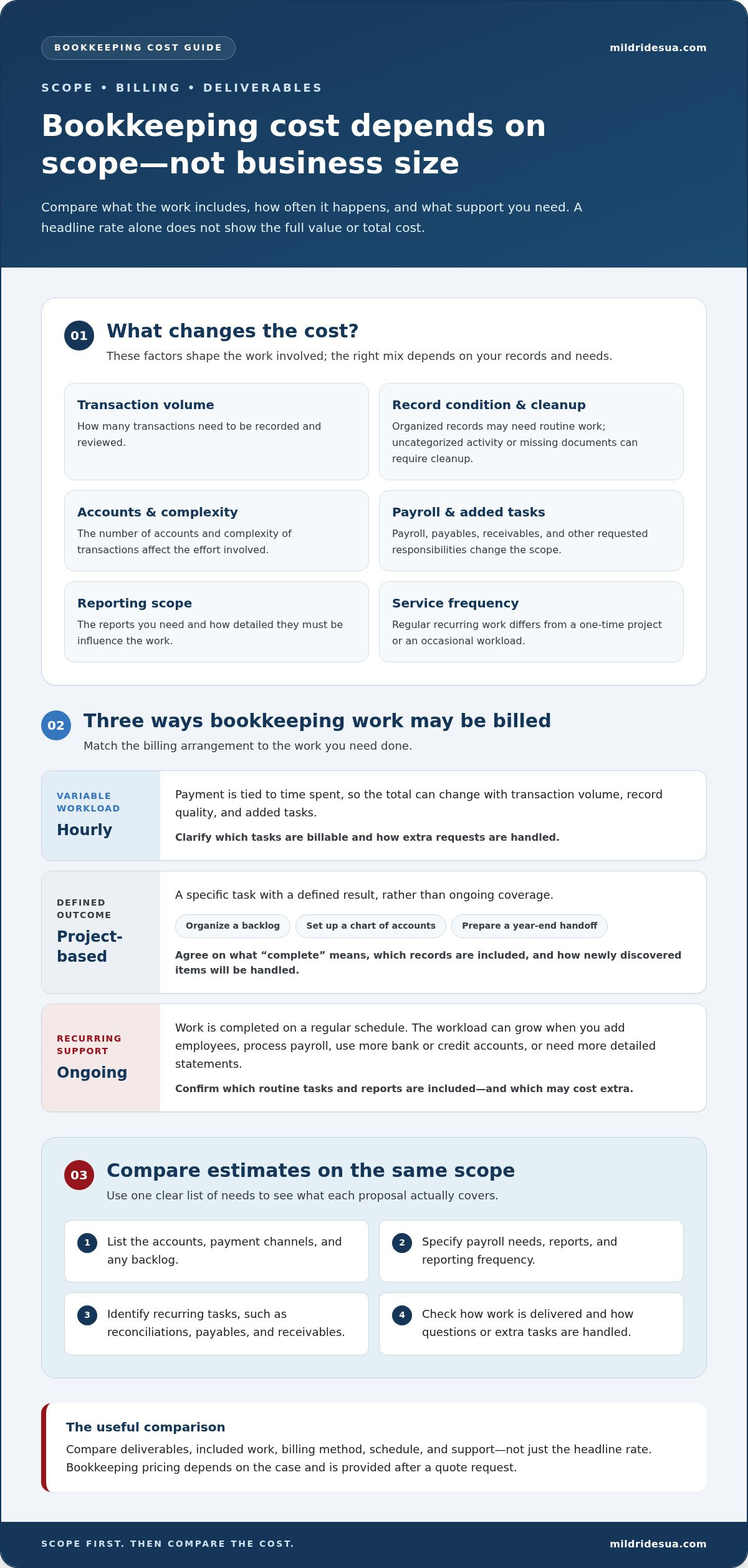
Bookkeeping fees depend on the work required, not simply the business’s size. An hourly arrangement ties payment to time spent, so the total can change with transaction volume, record quality, and added tasks. A business with organized records may need routine transaction entry and account reconciliations. One with months of uncategorized activity may require a separate cleanup before regular bookkeeping begins. A useful first question is, “What would change if I were to hire a bookkeeper for my small business?”
The price for bookkeeping support depends on the case and is provided after a quote request. Key cost factors include transaction volume, cleanup needs, payroll, reporting scope, and service frequency. These details help distinguish recurring bookkeeping from a one-time project. Before comparing proposals, list the records involved, the reports needed, and the tasks that must happen regularly.
Hourly billing can suit work that varies from month to month, such as resolving unreconciled transactions or handling a changing workload. The scope still matters: ask which tasks are billable and how additional requests are handled. A proposal should connect the billing structure to specific deliverables, such as reconciled bank statements or organized expense records.
Project-based bookkeeping is usually defined by a specific outcome rather than ongoing coverage. Examples include organizing a backlog, setting up a chart of accounts, or preparing records for a year-end handoff. The effort depends on the condition of the books, missing documents, number of accounts, and transaction complexity. Define what “complete” means, which records are included, and how corrections or newly discovered items will be handled.
Ongoing bookkeeping may be arranged as a recurring service, with work completed on a regular schedule. The workload can grow when a business adds employees, processes payroll, uses more bank or credit accounts, or needs more detailed statements. Confirm whether routine reconciliations, payables, receivables, payroll processing, and reporting are included. A low rate may not reflect the full cost if essential tasks are billed separately.
To compare options, use the same scope for each estimate. List the accounts, payment channels, payroll needs, reporting frequency, and any backlog. Then compare what each arrangement covers, how work is delivered, and how questions or extra tasks are handled. One proposal may price routine monthly work separately from cleanup, while another may combine defined tasks. Compare the deliverables, not just the headline rate.
Keep payments predictable by agreeing on the billing method, schedule, included work, and process for approving extra tasks. Revisit the scope when employees, sales channels, or reporting needs change. Before I hire a bookkeeper for my small business, I can use these details to set a clear budget and compare proposals on equal terms.
3. Bookkeeper responsibilities
A bookkeeper turns business activity into organized financial records that owners can use. Core responsibilities include recording income and expenses, managing accounts payable and receivable, and reconciling bank and credit card statements. For example, matching a bank transaction to an invoice helps show whether a customer payment arrived. Accurate categorization also makes financial reports more useful for reviewing performance and planning cash flow.
Regular reconciliation helps identify missing transactions, duplicate entries, and unexplained differences between records and statements. A bookkeeper can flag errors for review and maintain a clear trail of adjustments. The work may also include reports summarizing income, expenses, and account balances. Agree on which reports you need and how often, such as a monthly income and expense summary.
Payroll responsibilities can include recording wages, processing payroll, and organizing related records. Clarify which tasks are included and how employee changes, such as a new hire or updated pay details, will reach the bookkeeper. For sales tax, bookkeeping can involve sorting sales by transaction and tracking amounts collected. Define whether the engagement covers recordkeeping, calculations, filing support, or selected tasks only.
Small-business bookkeepers may also handle preparing Form 1099s. This work depends on having complete payment records and the relevant payee information. Keep invoices, payment histories, and vendor details organized so the bookkeeper can match payments to the underlying transactions. Clarify whether preparation is included, what information they need, and who reviews the completed forms before they are sent.
What financial records and access should I provide to a bookkeeper? Share the business bank and credit card statements, invoices, receipts, bills, payroll records, and payment details needed for the agreed tasks. Provide access to accounting software and relevant payroll tools with permissions suited to the work, rather than sharing a personal login. A clear list of accounts and records helps prevent confusion and missing entries.
Set responsibilities in writing before work begins. A practical scope can state who enters transactions, reconciles accounts, records employee payments, prepares reports, and follows up on missing documents. It should also explain how the bookkeeper raises questions about unusual activity. For example, an uncategorized bank charge can be flagged for owner review rather than assigned without context.
- Transaction records: Track income, expenses, payables, and receivables.
- Account checks: Reconcile bank and credit card statements, then flag discrepancies.
- Payroll and tax-related records: Define included payroll, sales tax, and Form 1099 tasks.
- Reporting and access: Agree on reports, software permissions, and document responsibilities.
Clear boundaries help keep the books dependable without confusing bookkeeping with every financial decision. The owner remains involved by providing context, reviewing reports, and answering questions about transactions. As the business adds employees or payment channels, update the task list so payroll records, sales activity, and reconciliations stay aligned.
4. Education and real-world bookkeeping experience
A candidate’s work history can reveal useful bookkeeping skills, even without a bookkeeping title. Roles such as accounting clerk, accounts payable or receivable specialist, payroll clerk, finance assistant, office manager, and auditing clerk may involve relevant work. Ask for examples of maintaining accounts, matching transactions, or preparing reports. Someone who has handled reconciliations should be able to explain how they found and resolved an imbalance.
What bookkeeping qualifications, certifications, and software experience should I look for? Look for sound accounting knowledge, attention to detail, organization, and clear communication. Ask about familiarity with U.S. Generally Accepted Accounting Principles (GAAP), relevant software, and whether the candidate is a Certified Bookkeeper accredited by the American Institute of Professional Bookkeepers.
Assess experience through specific tasks, not job titles alone. Ask candidates to describe their role in month-end closings, reconciliations, and financial statement preparation. A useful example would explain how they confirmed account balances, investigated a mismatch, and documented the correction. Experience supporting audits can also indicate strong operational ability, especially when the candidate can clearly describe their records and processes.
Software knowledge should match the tools your business uses. Discuss experience with your accounting software and related tools such as payroll systems, tax software, and spreadsheets. Ask how the candidate records transactions, reconciles accounts, and produces reports in those systems. If your business uses QuickBooks, for example, ask for relevant hands-on examples rather than a simple list of platforms.
Industry experience can help a bookkeeper recognize the financial patterns behind your business model. A real estate business, medical practice, and e-commerce company handle different expenses and revenue activity. Ask how the candidate’s past work relates to your operations and whether they understand the transactions behind your records. Relevant knowledge can support more targeted advice and accurate financial reporting.
Use a practical interview exercise to assess judgment and communication. Describe a recent bookkeeping challenge, such as an unexplained account difference or a transaction with unclear documentation. Ask the candidate to explain their approach, what information they would review, and how they would communicate the issue. A clear answer should show organized reasoning without claiming more than the available records establish.
- Accounting foundation: Discuss GAAP familiarity, basic accounting knowledge, and relevant education or work.
- Practical recordkeeping: Explore closings, reconciliations, financial statements, and audit support.
- Tools: Compare experience with your accounting software, payroll systems, tax software, and spreadsheets.
- Business fit: Ask for examples tied to your industry and a real bookkeeping challenge.
Finally, assess whether the candidate explains financial concepts clearly and responds thoughtfully to questions. A capable bookkeeper should communicate effectively with owners, employees, vendors, and an external accounting firm. Their examples should connect day-to-day recordkeeping with dependable reports and informed business decisions.
5. Choosing a bookkeeper who understands the business
A bookkeeper who understands your business model can interpret transactions in context, not just categorize them. An e-commerce seller, for example, may have marketplace deposits, refunds, shipping costs, and payment processor fees. A medical practice may have different expenses and revenue patterns. Relevant industry experience helps the bookkeeper recognize what belongs in your records and produce reports that reflect how the business operates.
Test that understanding with a real example. Describe a recent accounting challenge, such as a difference between sales records and bank deposits that you can’t explain. Ask how the candidate would investigate it, which documents they would review, and how they would explain their findings. A strong response should show a clear process, sound judgment, and the ability to communicate plainly.
Discuss how bookkeeping connects with your business’s compliance and filings. A bookkeeper, whether local or virtual, should understand the rules relevant to your operations. Ask how they organize transaction records for your tax preparer and flag missing documents or unusual activity. Clear boundaries matter: bookkeeping records support decisions and filings, while the engagement should define who handles each task.
How do I protect my business from bookkeeping errors, fraud, and data breaches? Give each user only the account permissions they need, use secure file sharing, and, where practical, separate approval authority from routine transaction entry. Review reconciliations and reports regularly, and ask about unfamiliar entries. These controls make unusual changes easier to spot and limit unnecessary access to sensitive records.
Where can I find local bookkeepers for small businesses? Ask trusted business owners for referrals, read online reviews, and explore professional networks. A local or virtual candidate should explain how their experience fits your industry and relevant local requirements. Compare that fit with your transactions, reporting needs, and communication preferences rather than choosing by location alone.
Before engaging bookkeeping services, agree on practical working details. Define which accounts and transactions are covered, what records you’ll provide, how questions are raised, and how often you’ll review results. For example, an owner might review a reconciliation summary and follow up on unfamiliar vendor payments. A written scope helps prevent gaps between bookkeeping tasks and the financial information your business needs.
Business fit also depends on how the bookkeeper works with your existing team. If employees submit expenses or an external accountant prepares filings, clarify how documents and questions move between them. Ask how the bookkeeper would respond when sales records don’t match deposits or a filing deadline approaches with incomplete records. Their answers can reveal whether their process supports your operations.
Choose a partner whose understanding is visible in the questions they ask about your transactions, systems, and reporting priorities. Discuss bookkeeping fit for your business to connect day-to-day recordkeeping with clearer financial oversight.
Mildrid Esua, CPA, PLLC: Bookkeeping and Small Business Tax Support
Mildrid Esua, CPA, PLLC provides bookkeeping and small business accounting alongside tax planning and preparation. If your records need consistent attention or your bookkeeping needs to connect with tax preparation, these services are a practical next step. The firm also provides payroll services and IRS representation, including help with back taxes, tax liens, and unfiled returns.
Reach out to discuss bookkeeping support, organize business records, or address a tax issue affecting your financial picture. A conversation can help clarify which service fits your current needs and how bookkeeping connects with your broader tax work.
To discuss bookkeeping or tax support for your business, contact Mildrid Esua, CPA, PLLC, or visit mildridesua.com.
Build a Stronger Financial Routine
Bookkeeping is most valuable when it becomes part of how you run the business, not a task you revisit only when something feels urgent. Before hiring a bookkeeper, define what you want your financial information to help you do. You might want to plan cash needs, understand spending patterns, or prepare for a conversation with an accountant. A clear purpose gives the working relationship direction from the start.
Turn your priorities into a workable arrangement by identifying the records and decisions that matter most, then discussing how ongoing bookkeeping can support them. Mildrid Esua, CPA, PLLC offers small-business accounting and tax support, making the firm a relevant point of contact when your bookkeeping needs connect with broader financial matters.
Contact Mildrid Esua, CPA, PLLC to discuss a path toward clearer financial oversight. A consistent process can give you a steadier foundation for what comes next.
Frequently Asked Questions
What does a bookkeeper do?
A bookkeeper maintains records showing how money moves through a business. Beyond entering transactions, the role can include organizing supporting documents, matching entries to bank activity, and preparing reports for review. For example, recording a supplier invoice alongside its payment makes the expense easier to trace later. The agreed scope determines which recurring tasks the bookkeeper handles and which remain with the owner.
What are the pros and cons of hiring a bookkeeper?
Hiring a bookkeeper can give an owner more time for operations and a clearer view of business activity. The trade-offs include added expense, sharing sensitive financial information, and time spent setting up a working process. A seasonal business, for example, may have a fluctuating workload, so ongoing support should fit its changing activity. A defined scope and regular review help the owner retain visibility without managing every entry personally.
What should a business owner look for when hiring a bookkeeper?
Look for accuracy, confidentiality, sound judgment, and the ability to explain financial information plainly. Ask for examples of how the person handles unclear transactions, protects sensitive records, and communicates with owners or vendors. A practical fit also means a working style that suits your team. If employees submit expenses, for instance, clarify how questions and missing receipts will be handled before the process begins.
What does a bookkeeper do for a small business?
For a small business, a bookkeeper can organize day-to-day financial activity into records owners can use to monitor operations. They may track customer payments, supplier bills, payroll entries, and account activity, then prepare reports that support planning. An owner reviewing a monthly report, for example, can compare recorded expenses with business plans and identify items needing attention. Agree on the tasks and reporting format that suit your operation.
How much does it cost to hire a bookkeeper in the United States?
Bookkeeping costs depend on the work included, the condition of existing records, transaction volume, and how often support is needed. A project to organize past records differs from recurring work that includes reconciliations, payroll entries, or reporting. To compare estimates, give each provider the same task list and ask which deliverables are included. For a specific engagement, the price depends on the case and is provided after a quote request.
What is the average hourly rate for a freelance bookkeeper?
Freelance bookkeeper rates vary with experience, task complexity, and workload, so an hourly figure alone may not show the full cost. Ask which activities are billed, whether cleanup work is separate, and how extra requests are handled. Routine transaction entry and untangling an incomplete records backlog, for example, are different scopes. Compare the expected work and deliverables, not just the billing method.
How do I find and vet a qualified small-business bookkeeper?
Start with referrals from trusted business owners, professional networks, and online reviews, then assess candidates against your needs. Ask about relevant industry experience, software familiarity, and how they would approach a recent bookkeeping challenge. For local support, consider professionals serving Greensboro, High Point, Burlington, Kernersville, Jamestown, Oak Ridge, Summerfield, and Winston-Salem. Judge fit by examples and communication, not location alone.
What questions should I ask when interviewing a bookkeeper?
Ask what kinds of businesses they support, which accounting tools they use, how they communicate, and how onboarding works. Explore how they assess existing records and handle unclear transactions. Describe a recent issue, such as a payment that doesn’t match an invoice, and ask them to explain their reasoning. Their answer can show how they investigate details, communicate findings, and keep the working relationship clear.




Leave a Reply
Your email is safe with us.